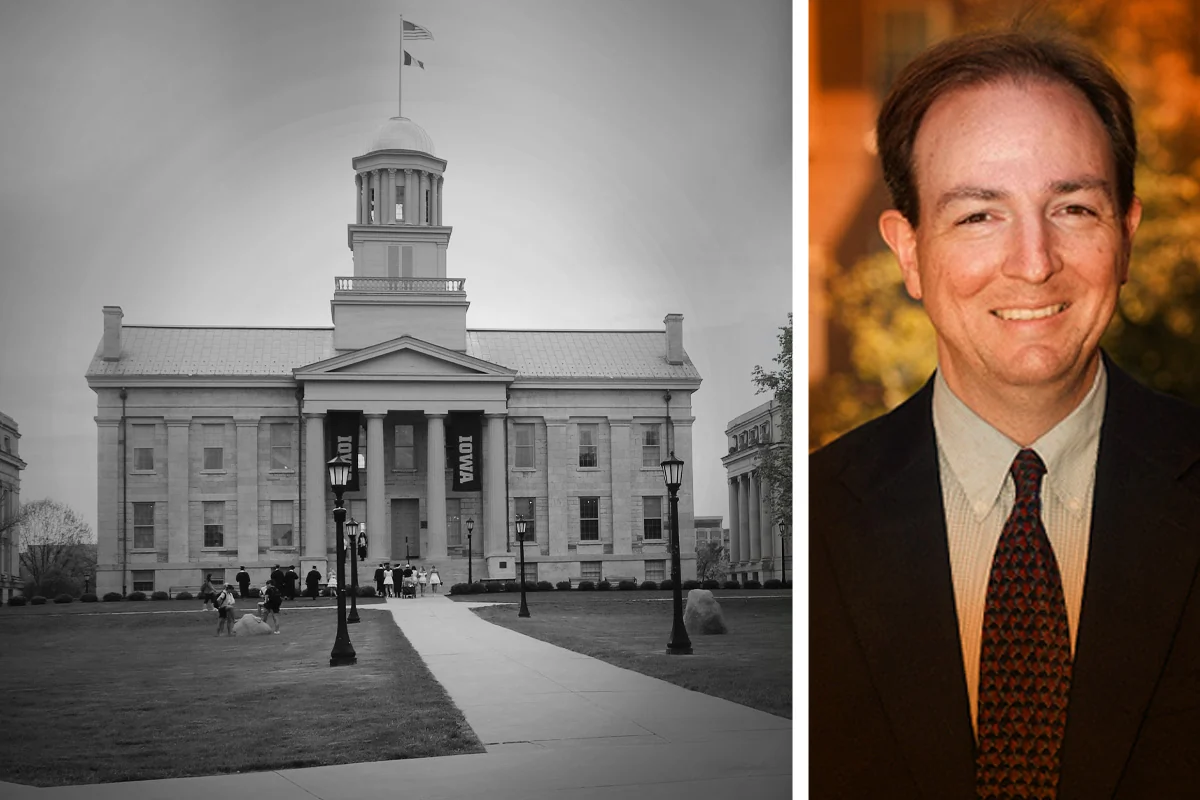
The University of Iowa's Center for Intellectual Freedom is in crisis. Just two weeks after the Iowa Board of Regents announced Carson Holloway as its new director, he withdrew to pursue another offer. This is not merely an embarrassment—it is a warning sign that the board's approach to leading this institution is fundamentally broken.
Created by the State Legislature in 2025, the Center for Intellectual Freedom was supposed to be a flagship project. Instead, it has become a revolving door of leadership failures. The center's former interim director, Luciano de Castro, was removed last month after accusing the board of violating state law by interfering with operations and undermining the center's independence. The regents rejected those claims, but their rejection rings hollow when paired with the immediate result: multiple faculty advisers resigned this fall over the dispute.
Holloway's sudden departure is particularly damaging because it suggests the board learned nothing from the de Castro debacle. Holloway is a respected figure—chair of the political science department and interim chair of the philosophy department at the University of Nebraska at Omaha, with experience at multiple conservative think tanks. If someone of his stature could not be persuaded to lead the center, the problem is not the candidate pool. The problem is the job itself has become toxic.
The board's credibility has eroded to the point where even a carefully selected director sees better opportunities elsewhere. This is what happens when leadership disputes play out publicly, when accusations of unlawful interference linger unresolved, and when faculty members vote with their feet by resigning. No amount of closed-session meetings about replacement candidates will fix the underlying issue: the board must first address why this center cannot retain leadership.
The Center for Intellectual Freedom's Executive Committee and Advisory Council are set to meet Friday in closed session to discuss other candidates. But before they do, the board needs to have an honest reckoning about governance. Did the regents truly violate the spirit of state law in their dealings with de Castro? Why did so many faculty advisers lose confidence simultaneously? What structural changes would give the next director actual independence to do the job?
The State Legislature created this center with purpose. It deserves leadership that can stay the course. The Iowa Board of Regents should not simply recruit a replacement—it should reform itself first. Otherwise, the next director will also find a better offer elsewhere, and the cycle of failure will continue.