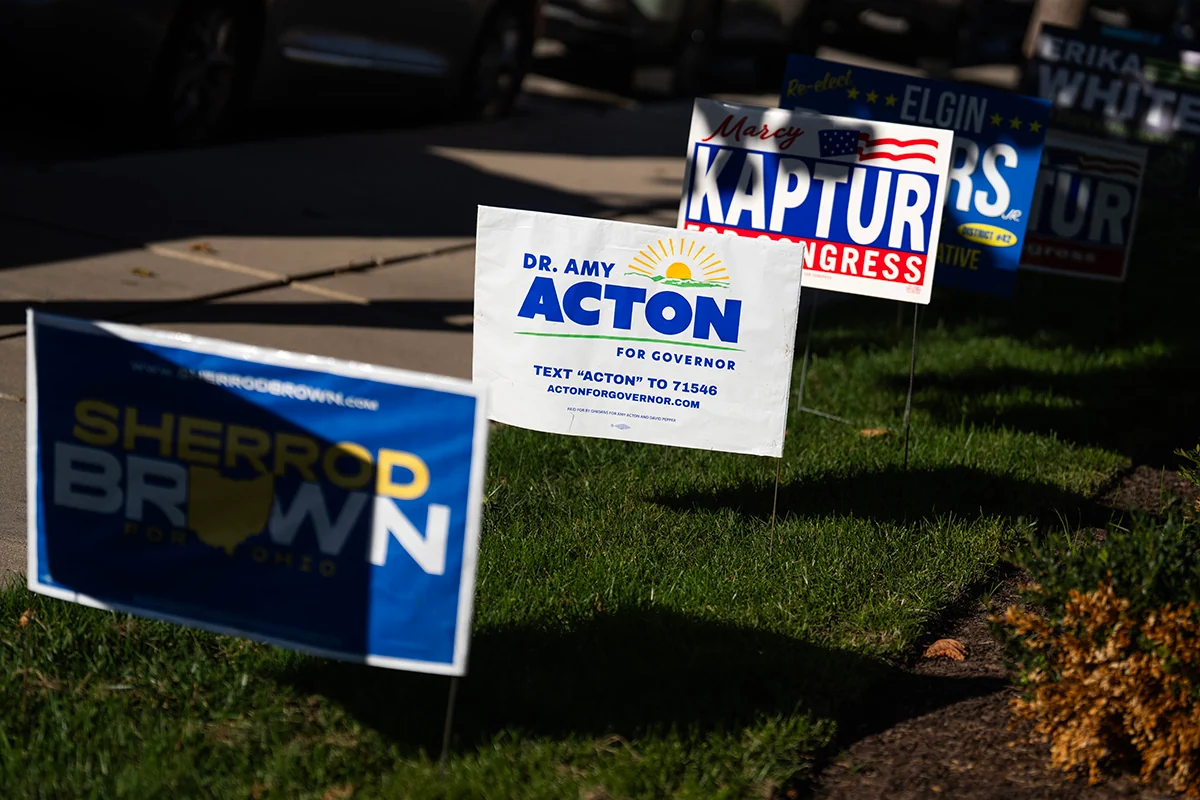
Tuesday's midterm elections have transformed higher education from a technical policy question into a full-blown political battleground. According to Tom Harnisch, vice president for government relations at the State Higher Education Executive Officers Association, 'Higher education has a great deal at stake in the November elections—gubernatorial elections in 36 states and thousands of legislative seats on the ballot.' This is not how university governance should work. When fundamental questions about academic freedom, diversity, and institutional autonomy become referendum items, we've ceded control of education to electoral cycles and ballot measure campaigns.
Consider what's actually on ballots this year. Arizona's Proposition 142 would amend the state constitution to ban diversity statements and prohibit universities from requesting that applicants discuss their race or ethnicity. Helen Brewer, a senior policy specialist at the National Conference of State Legislatures, noted this represents 'a new topic this year: restrictions on transgender athletes' participation.' These aren't minor administrative tweaks—they're constitutional amendments that would strip universities of pedagogical autonomy. Darrell Hill, the American Civil Liberties Union of Arizona's policy director, has written that the proposition 'violates the First Amendment by prohibiting certain ideas, viewpoints, and beliefs from being discussed in colleges and in government workplaces.' Yet voters, not educators or constitutional scholars, will decide whether colleges can discuss race in academic contexts.
The problem extends beyond state ballots. Federal control is tightening too. If Democrats win control of Congress—needing to net four seats in both the House and Senate—they plan their own oversight campaigns against the Trump administration's higher education policies. Emmanual Guillory, assistant vice president for government relations at the American Council on Education, said Democrats plan to hold hearings on the administration's agreements outsourcing Department of Education programs. Even if Democrats prevail, Guillory cautioned that 'we still have a Republican president, and he still has the power to veto, and so a lot of these initiatives will likely not become law.'
Meanwhile, state legislatures continue consolidating power. Harnisch noted that '39 states currently have a trifecta, where a single party holds the governorship and both chambers,' enabling higher education policies to 'move quickly from introduction to enactment.' These policies, including 'legislative setting of certain general education requirements' and 'establishment of conservative-leaning civics centers,' spread across state lines through model legislation shared by advocacy organizations. The result: universities are now caught between partisan majorities fighting for control through electoral victories.
Todd Wolfson, president of the American Association of University Professors, said his organization's 'central goal' is 'trying to win free public higher education.' But even this progressive aspiration reveals the problem: education policy shouldn't require candidates to win elections to become reality. Universities need sustainable, democratic governance structures insulated from electoral swings—not constitutional amendments, not partisan vetoes, and not ballot measures funded by billionaires like Gary K. Michelson, whose $8.4 billion California immunology bond proposal stands to benefit primarily his own nonprofit institute. Democracy matters, but so does institutional integrity.