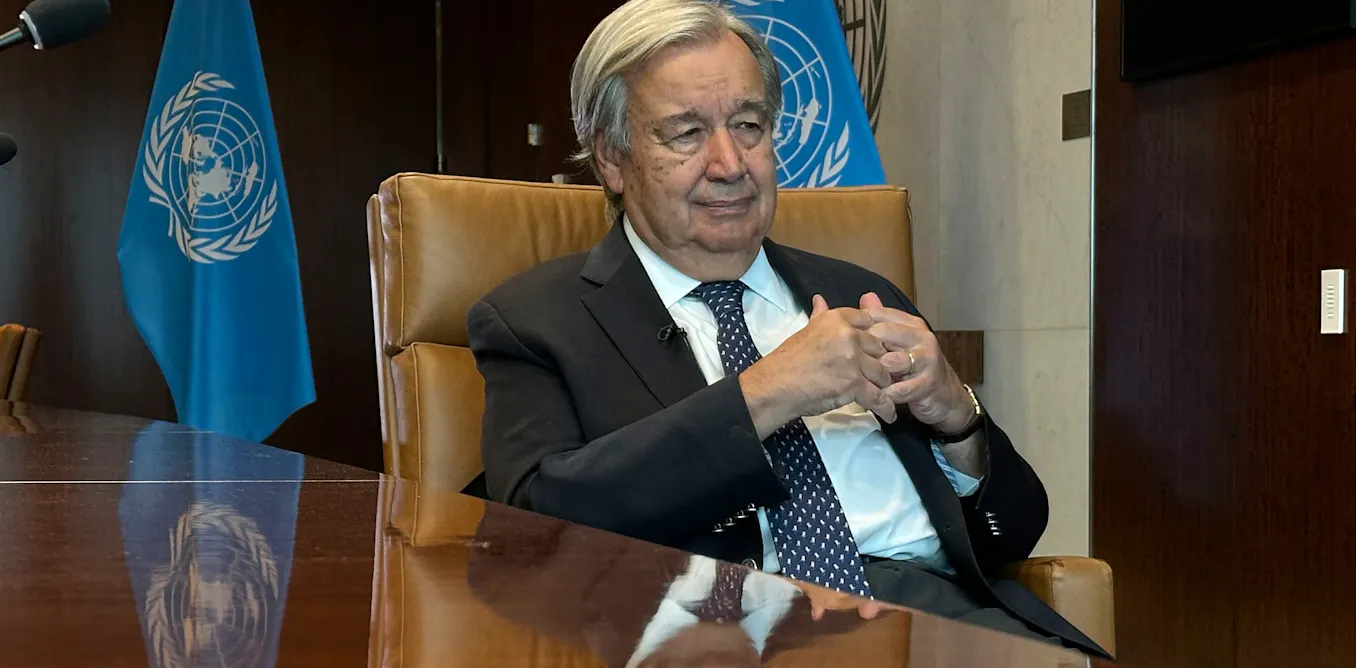
# UN Secretary General Antonio Guterres Steps Down After Decade; Education Legacy Remains Contested
António Guterres will leave his post as United Nations Secretary General after a decade leading the world's largest multilateral organization. His tenure saw him champion education access and pandemic recovery, yet critics argue he fell short on protecting vulnerable populations, including students in conflict zones and children in developing nations.
Guterres took office in 2017 with promises to advance the Sustainable Development Goal 4, which aims to ensure inclusive and equitable quality education for all by 2030. Under his watch, UNESCO reported mixed results. Global primary enrollment rose to 89 percent, but learning poverty deepened. By 2023, over 250 million children remained out of school, and reading proficiency gaps widened across low-income countries.
His administration launched the Education Cannot Wait initiative, a $500 million fund for education in humanitarian emergencies. The program provided schooling to 11 million children in conflict-affected regions between 2016 and 2023. Yet funding fell far short of the $1.5 billion annual need identified by education experts, leaving teachers unpaid and school infrastructure crumbling in Syria, Yemen, and the Democratic Republic of Congo.
On climate and education, Guterres repeatedly warned that rising temperatures threaten school operations in developing nations. Floods displaced millions of students in Pakistan and Nigeria during his tenure. However, his office did not adequately pressure wealthy nations to fund climate-resilient schools in the Global South, according to educators and development organizations.
The pandemic response revealed both strengths and gaps. The UN coordinated remote learning efforts and advocated for school reopening. Guterres personally lobbied governments to prioritize vaccinating teachers. Still, 250 million students lost access to schools during lockdowns in 2020-2021, and his office lacked enforcement mechanisms to ensure equitable recovery.
Guterres championed gender equality in education, pushing for scholarship programs for girls in Sub-Saharan Africa and South Asia. Organizations like Girls' Education Challenge expanded, reaching 1.3 million girls. Yet early marriage and child labor continued rising in low-income countries where UN advocacy did not translate into concrete policy change.
His administration also struggled with internal accountability. Reports of sexual abuse and misconduct by UN peacekeepers and staff members in schools and refugee camps surfaced repeatedly. Guterres pledged reform but faced criticism from human rights groups for moving too slowly on investigations.
On higher education access, Guterres promoted scholarships for African students through the UN Academic Impact program. However, brain drain from developing nations accelerated during his tenure as students sought degrees abroad, exacerbating workforce shortages in their home countries.
Education experts acknowledge Guterres raised global awareness about learning crises and mobilized some funding. His successor will inherit a system where over 1 billion students lack basic literacy skills and teacher shortages affect 69 million classrooms worldwide. The next secretary general will face pressure from education ministers, teacher unions, and student advocacy groups to match rhetoric with resources and enforcement mechanisms that his tenure did not consistently deliver.