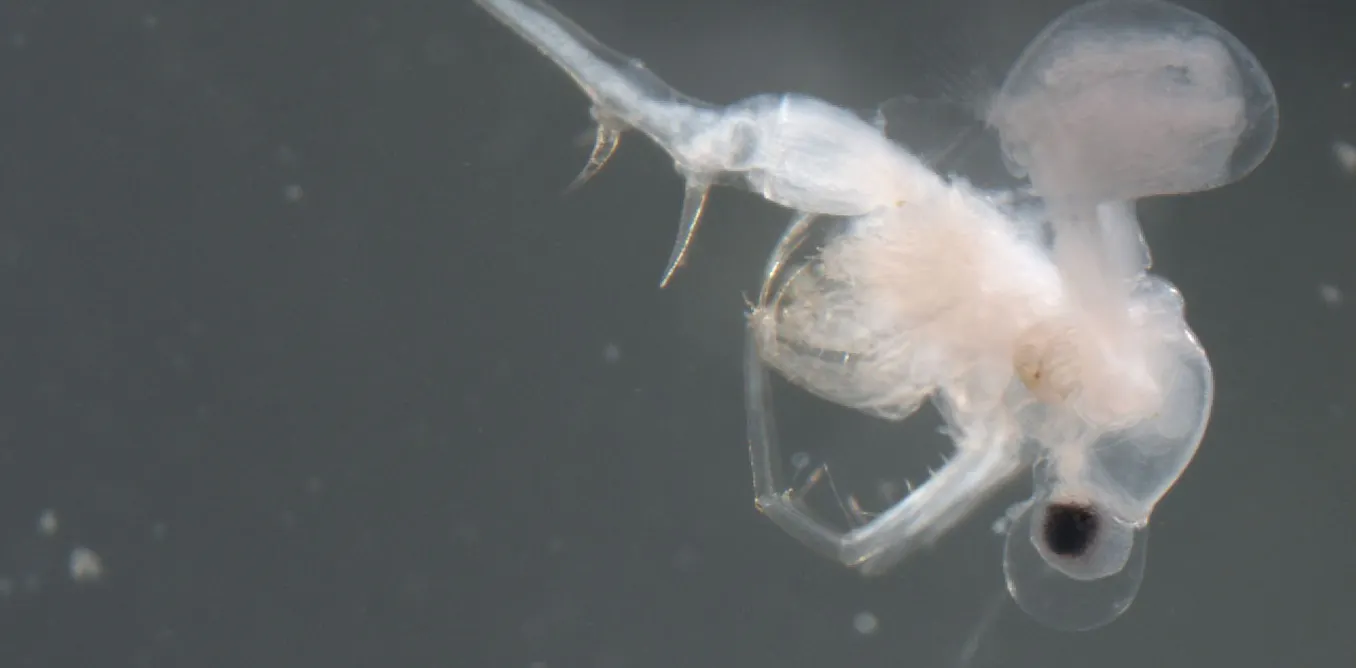
# Long-held assumptions about Canada's invasive spiny water flea face scientific challenge
Canadian researchers have overturned a core assumption about one of the country's most damaging invasive species. The spiny water flea, long blamed on shipping ballast water from overseas vessels, may have arrived in North America through natural means thousands of years ago, according to new findings.
The discovery reshapes how scientists understand biological invasions in the Great Lakes and beyond. For decades, environmental managers treated the spiny water flea as a poster child for human-caused ecological damage. The organism clogged water intake pipes at power plants and treatment facilities, damaged fish populations by competing with native species for zooplankton food, and spread across freshwater systems from Lake Ontario westward.
Researchers analyzed sediment cores from lakes across the continent to trace the species' presence over millennia. Rather than finding the spiny water flea's arrival tied to the modern shipping era, the evidence points to much earlier establishment. The organism may have colonized North American waters during natural climate shifts or through avian vectors, patterns that reshape decades of invasion biology doctrine.
The implications matter for water management policy and invasive species funding. If the spiny water flea arrived naturally rather than through ballast water discharge, it challenges the justification for expensive ballast water treatment requirements imposed on the shipping industry. However, the discovery does not erase the species' genuine ecological damage to fisheries and water infrastructure across Ontario, Michigan, Wisconsin, and other regions.
The finding also complicates public messaging around invasive species prevention. Environmental agencies have used the spiny water flea as a teaching tool to demonstrate why ballast water regulations matter. A natural arrival timeline suggests the species may have established itself despite human efforts at containment, not because of them.
Scientists emphasize this research does not diminish the real problems shipping-borne invasions create. Zebra mussels, round gobies, and sea lampreys arrived through demonstrable human pathways and continue to drain billions in control costs across North America. The spiny water flea case simply reveals that not every invasive species follows a predictable story of global trade spreading organisms across continents.
The research reflects broader uncertainty in invasion biology. Historical records and museum specimens often cannot document species arrival with precision. Sediment analysis offers a more reliable timeline but carries its own limitations. Researchers cannot always determine exact transport mechanisms from geological evidence alone.
Funding agencies and policymakers now face questions about resource allocation. Should prevention efforts focus on shipping routes where ballast water definitely drives invasions, or does the spiny water flea discovery suggest that natural arrival remains an underappreciated pathway for other species? Great Lakes restoration programs may need to reconsider priorities based on this revised understanding of invasion ecology.
The discovery does not suggest abandoning ballast water treatment. Rather, it provides scientists a more complete picture of how ecosystems change and which human activities truly pose the greatest invasion risk. Understanding the true origins of problem species helps target management dollars where they matter most.