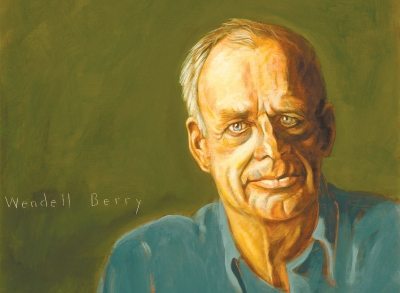
# Wendell Berry's Vision of "Good Work" Reshapes How Educators Think About Student Preparation
The writer and farmer Wendell Berry poses a deceptively simple question that challenges the entire structure of modern education: What is the effect of your work? That question, rooted in Berry's philosophy of meaningful labor and ecological stewardship, now shapes how some educators approach career preparation and student development.
Berry's framework rests on two core premises. First, students should understand the actual consequences of their labor, not just the paycheck. Second, education should prepare young people to choose work deliberately, rather than defaulting into jobs purely for survival. This distinction matters because it reframes career readiness from a transactional exchange (credentials for income) into something deeper: alignment between personal values, community needs, and sustainable practice.
TeachThought, the education platform that highlighted Berry's influence, notes that his thinking challenges the prevailing narrative in American K-12 and higher education systems. Most schools organize around college and career pathways emphasizing earning potential and resume-building. Students rarely examine whether their chosen field produces work they can actually stand behind. Berry's question flips this: Does the work you do improve or harm your community, environment, and yourself?
Several educational movements now incorporate this philosophy directly. Project-based learning programs increasingly ask students to trace supply chains, understand labor conditions, and examine the ripple effects of production decisions. Some vocational and agricultural education programs, particularly those in rural areas, teach students both practical skills and philosophical reflection on stewardship. A few liberal arts colleges embed Berry's writing into ethics courses that ask students to define "good work" for themselves before entering career training.
The practical application proves complex. Berry himself worked as a farmer, writer, and professor simultaneously, modeling integration of intellectual and manual labor. Few contemporary career paths offer this blend. Yet educators argue that Berry's central insight remains valid regardless of profession: students should develop the capacity to evaluate whether their work serves or harms others.
This framework particularly resonates with students interested in environmental sustainability, social enterprise, and trades. A student considering agricultural work, renewable energy installation, or social-impact business naturally engages Berry's questions. But the philosophy extends everywhere. A student entering nursing, teaching, or even accounting faces the same inquiry: Does this work produce genuine value, and can I pursue it with integrity?
The tension lies in implementation. Not every student can afford to choose work based purely on alignment with values. Economic necessity shapes options. Yet educators who adopt Berry's lens argue this makes the conversation more important, not less. By naming the distinction between compulsory labor and chosen work, teachers help students recognize when they face genuine choice versus constraint. That awareness itself becomes educational.
Berry's influence on education reflects a broader shift away from the narrow college-for-all mandate that dominated the 2000s. Educators now ask whether traditional four-year paths fit every student and whether schools adequately prepare students for trades, entrepreneurship, and non-linear careers. Berry's framework fits this evolution because it emphasizes student agency and community rootedness over credential accumulation alone.
For schools implementing this philosophy, the method matters as much as the message. Teachers assign reflection assignments asking students to investigate their career field's environmental and social impact. Service learning projects connect classroom skills to real community problems. Advisory relationships include conversations about work values, not just test scores and applications.
The practical outcome centers on a single goal: graduating students who can name what they value, recognize the effects of their labor, and make deliberate choices about how they spend their working lives.