# Decision Education Emerges as Strategy to Close STEM Workforce Gap
STEM workforce shortages are intensifying globally. Demand for STEM workers is projected to rise nearly 11 percent over the next decade, yet schools struggle to prepare enough qualified candidates for these roles. A new pedagogical approach called Decision Education is gaining traction as a method to make STEM learning more accessible and career-relevant to broader student populations.
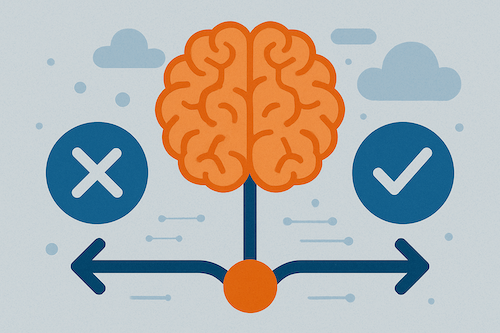
Decision Education integrates real-world decision-making frameworks into STEM coursework. Rather than teaching science, technology, engineering, and mathematics as abstract disciplines, this approach anchors lessons in authentic problems students encounter or care about. The strategy aims to bridge the gap between classroom learning and the workplace skills employers demand.
The shortage of STEM talent constrains economic growth across multiple sectors. Technology companies, manufacturing firms, healthcare systems, and research institutions compete fiercely for graduates with engineering, computer science, and advanced mathematics backgrounds. Many students, however, view STEM subjects as inaccessible, culturally disconnected, or irrelevant to their lives. Enrollment patterns reflect this disconnect. Women remain significantly underrepresented in computer science and engineering programs, while low-income and minority students pursue STEM pathways at lower rates than their peers.
Decision Education addresses these barriers by contextualizing STEM within problems students must solve. For example, a mathematics class might tackle cost-benefit analysis for community infrastructure projects. A biology course could examine public health decisions during disease outbreaks. Engineering classes might design solutions to local environmental challenges. This approach develops technical competency while building the reasoning skills professionals actually use.
Teachers implementing Decision Education report stronger student engagement. When students see direct connections between formulas and consequences, between data analysis and real choices, abstract concepts become tangible. This shift proves particularly effective for students who have historically been excluded from STEM pipelines.
The framework also aligns with employer expectations. Companies increasingly value employees who combine technical expertise with critical thinking, ethical reasoning, and collaborative problem-solving. Decision Education cultivates these competencies alongside subject mastery. Students learn not just how to calculate or code, but when to apply those skills and how choices shape outcomes.
Implementation requires teacher professional development. Educators must learn to design lessons around decision scenarios, facilitate discussions about tradeoffs and consequences, and assess students' reasoning alongside their technical accuracy. Some districts have begun piloting Decision Education through partnerships with universities and nonprofits specializing in this pedagogy.
Early adopters report measurable outcomes. Student motivation increases, particularly among groups historically underrepresented in STEM. Course completion rates improve. Some schools observe higher rates of students enrolling in advanced STEM courses after experiencing Decision Education modules.
The approach does not replace traditional STEM instruction. Rather, it reframes how STEM content is taught and why it matters. A calculus class still covers derivatives and integrals, but students apply these concepts to decisions about manufacturing efficiency, medication dosing, or resource allocation.
As the STEM workforce gap widens and competition for talent intensifies, districts exploring Decision Education position themselves to develop more diverse talent pipelines. The strategy offers schools a practical tool to make STEM education more inclusive, engaging, and aligned with both student aspirations and employer needs.