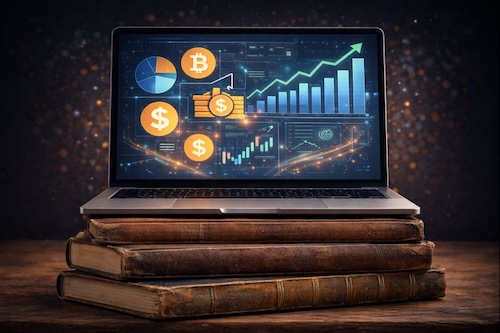
# Financial Education Needs Real-Time Data, Not Outdated Textbooks
Static textbooks fail to teach students about personal finance in a rapidly changing economy. Schools now recognize that financial education requires live data, dynamic updates, and tools that reflect current market conditions, inflation rates, and real-world scenarios students will face after graduation.
The problem is straightforward. A textbook printed in 2023 cannot teach students about 2026 interest rates, cryptocurrency volatility, or shifting housing markets. A student learning from a chapter on mortgage calculations using three-year-old examples receives obsolete information. They graduate unprepared for actual financial decisions they must make immediately.
Financial literacy has become a graduation requirement in many states. As of 2024, 21 states mandate a personal finance course for high school completion, up from just five in 2015. Yet many schools deliver this critical content through outdated materials that contradict current reality. Teachers struggle to maintain relevance when their primary resources lag behind real markets.
Live financial education platforms address this gap directly. These tools pull real-time data from market feeds, banking systems, and economic databases. Students work with actual mortgage rates from today, not hypothetical rates from 2020. They track real stock prices, understand actual inflation impacts on purchasing power, and see how economic policy changes affect their own finances. This approach transforms financial education from abstract theory into practical preparation.
The pedagogical shift matters. When a student calculates loan payments using current interest rates, they grasp urgency and personal relevance. When they simulate investment decisions with live market data, they understand volatility and risk in concrete terms. When they compare rental costs and home purchase prices in their own community using current data, financial concepts become localized and actionable.
Several edtech companies now offer dynamic financial education platforms. These systems allow teachers to reference current market conditions, real inflation data, and actual banking products available to students. Some integrate with student banking apps to show actual account features and fee structures. Others connect to investment simulators using real market feeds, eliminating the problem of students practicing with prices that no longer exist.
Teachers report higher engagement when financial education reflects the world outside the classroom. Students ask better questions when the math connects to their circumstances. A student in a high cost-of-living area understands housing affordability differently when analyzing actual local prices rather than generic textbook examples.
The transition from static to live content requires institutional change. Schools must invest in platform subscriptions or robust internet connectivity. Teachers need professional development to use these tools effectively. Curriculum frameworks must shift from fixed content to flexible, updatable modules. Districts cannot simply assign chapters anymore; they must ensure educators can navigate dynamic resources.
The investment pays dividends. Students who complete personal finance courses using current data report higher confidence in financial decision-making. They demonstrate better understanding of budgeting, debt management, and long-term planning. Employers report that graduates educated through dynamic platforms arrive with more practical financial knowledge than those taught through traditional textbooks.
Financial literacy shapes lifelong outcomes. Decisions about education loans, housing, insurance, and retirement begin in the years immediately after high school. When students learn these lessons from outdated materials, they enter adulthood with information divorced from reality. Live financial education closes this gap and gives students the tools to navigate actual economic life.