# What Students Actually Remember: Project-Based Learning Holds the Key
Students forget most of what teachers teach them. That's not failure. That's neuroscience. The brain retains information tied to real problems, emotions, and hands-on experience. Teachers who understand this design lessons around projects instead of lectures.
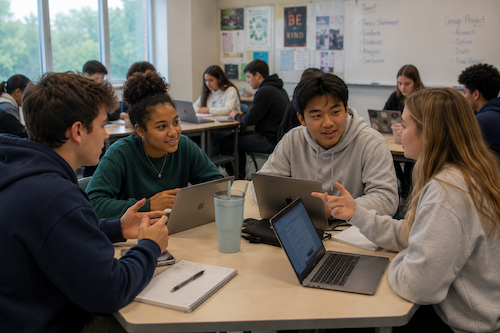
Project-based learning, or PBL, flips the traditional classroom model. Instead of absorbing content passively, students tackle authentic challenges that require research, collaboration, and iteration. A group designing a water filtration system learns chemistry, engineering, and civic responsibility simultaneously. A team producing a documentary about local history masters storytelling, research methods, and technological skills. The content sticks because students need it to solve something real.
The research backing this approach is solid. When students engage in PBL, they retain more information, develop deeper understanding, and transfer skills to new contexts better than peers in traditional classrooms. A 2019 meta-analysis published in the journal Educational Research Review found that project-based learning improved both achievement and retention, particularly for lower-performing students.
But retention alone misses the point. PBL builds what employers and colleges actually want: curiosity, empathy, adaptability, and the ability to work across disciplines. These dispositions don't show up on standardized tests. They emerge when students bump into real constraints, negotiate with teammates, and revise their work based on feedback. A student who completes a worksheet may ace a quiz. A student who builds a solution to a community problem develops resilience.
The transaction model of school, where students exchange compliance for grades, has clear limits. It produces students who know how to perform for assessments but struggle to apply knowledge when context changes. PBL inverts incentives. Success means solving the problem, not gaming the test. Grades follow naturally from quality work.
Implementation matters enormously. PBL done poorly becomes busy work wrapped in project language. Effective PBL requires teachers to design with discipline. The project must connect to learning standards, not replace them. Students need scaffolding, not just freedom. Feedback must drive revision. Teachers facilitate rather than lecture, but facilitation demands expertise.
Schools adopting PBL report changes beyond academic outcomes. Student attendance improves. Behavior referrals drop. Students show higher engagement during independent work. Parents notice their children talking about school differently, framing problems as solvable rather than insurmountable.
Yet barriers persist. Standardized testing still dominates accountability systems in most districts, creating pressure to prioritize coverage over depth. Teacher preparation programs rarely train educators in PBL design. Class sizes and scheduling make collaboration logistically difficult. Budget constraints limit access to materials and community partnerships.
Districts serious about retention and skill development treat PBL as infrastructure, not elective. They invest in professional development, adjust schedules to allow longer project cycles, and redesign accountability measures to value demonstrated competency. International Baccalaureate programs and schools in the High Tech High network demonstrate this works at scale.
The classroom transaction doesn't end. Students still show up, complete work, earn grades. But when that transaction centers on solving real problems alongside others, something shifts. What students remember becomes what they can actually do.