# Finding the "Low Way": How Schools Can Reclaim Creativity Amid Pressure for Performance
A parent's simple question about taking the scenic route instead of the highway offers a metaphor for what many educators now recognize as missing from American classrooms. Schools have narrowed their focus on measurable outcomes and standardized assessments, often at the expense of the kind of open-ended exploration and creative thinking that shaped childhood for previous generations.
The tension between accountability and creativity has defined education policy for two decades. Since the No Child Left Behind Act of 2001, schools have invested heavily in test preparation, data tracking, and curriculum alignment to measurable standards. These systems produced gains in some areas. But educators and researchers increasingly report that the relentless focus on standardized metrics has crowded out time for projects without predetermined right answers, collaborative problem-solving that meanders, and the kind of creative risk-taking that feels inefficient when measured against quarterly benchmarks.
The "low way" metaphor captures something real about student learning. When children take time to explore ideas without rushing to a conclusion, they develop resilience, curiosity, and the ability to revise thinking based on new information. These capacities matter for college, careers, and citizenship. Yet classroom time remains scarce. Teachers face pressure to cover content, prepare students for assessments, and document learning through metrics that administrators can report.
This creates a false choice. Assessment and accountability need not eliminate creativity. But implementation matters. Some schools have begun restructuring how they approach both.
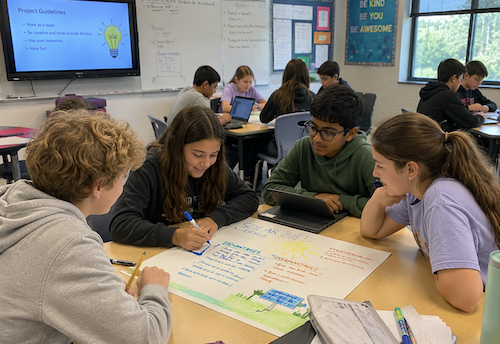
Schools in districts like Montclair, New Jersey, and districts participating in the Coalition of Essential Schools have redesigned curricula to embed creative work within standards-aligned instruction. Rather than treating art and design as enrichment, they position these practices as tools for understanding core subjects. A science unit on water systems, for instance, might ask students to design a water filtration model, then iterate based on testing. The work meets learning standards while requiring authentic creativity.
Teachers report that this approach actually improves retention. Students remember concepts they had to invent solutions around better than facts they memorized for tests. The tradeoff is that assessment becomes more complex. Teachers must evaluate both the creative process and the learning outcomes. This requires different forms of documentation than bubble sheets allow.
Technology has opened new possibilities. Digital portfolios, video documentation of student work, and rubrics aligned with both creative thinking and content mastery help teachers capture learning that happened during the "low way." Platforms like Schoology and Canvas allow teachers to provide real-time feedback on drafts and revisions, making the creative process itself visible and gradable.
The challenge remains structural. Teachers cannot carve out time for creative exploration unless schedules allow it. This means reducing the number of standards expected to mastery at each grade level, a shift that requires district and state policy changes. A few states, including Vermont and New Hampshire, have granted schools flexibility to define local learning targets alongside state standards, creating more room for creative implementation.
The question is not whether schools can afford creativity. They cannot afford to abandon it. Colleges and employers consistently identify creativity, collaboration, and resilience as essential capacities. These develop through the kind of open-ended exploration that asking "Are we going to take the low way?" represents. Schools that can preserve space for that question, while still meeting accountability requirements, position students to thrive in futures that demand more than test scores.