# Teaching Multilingual Learners to Navigate AI and Deepfakes
Schools are beginning to teach multilingual learners not just how to spot deepfakes, but how to think critically about artificial intelligence and digital authenticity more broadly. The shift reflects a growing recognition that media literacy in the AI era requires deeper skills than surface-level detection.
Deepfakes, synthetic media created using AI to manipulate video, audio, or images, pose particular challenges for multilingual students. These learners already navigate multiple language systems and cultural contexts. Adding AI-generated content to that landscape complicates their ability to assess what is real. A deepfake video in a student's native language, or targeting cultural references specific to their community, can be especially convincing.
Educators working with multilingual populations increasingly frame deepfake literacy not as a technical skill but as a language and literacy issue. Students learning English as an additional language, for instance, may struggle to detect subtle linguistic inconsistencies in AI-generated text. Accent variations or grammatical patterns that feel "off" to native speakers might seem normal to learners still acquiring English proficiency.
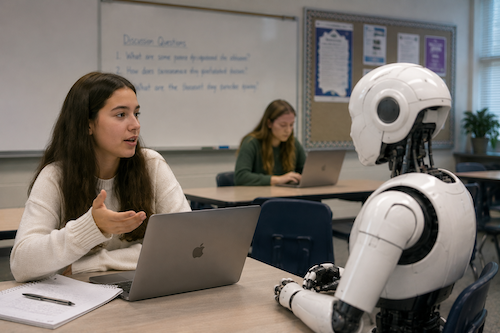
The broader teaching approach goes beyond detection. Educators help students interrogate AI by asking fundamental questions: Who created this content and why? What data trained this AI system? Whose voices and perspectives are represented or missing? These questions work across languages and cultures, making them accessible to diverse learner populations.
Some schools have integrated this work into English language arts and social studies curricula. Others embed it into technology classes or create dedicated media literacy units. The most effective approaches combine classroom instruction with hands-on practice. Students analyze real examples of AI-generated content, discuss how they initially reacted, and trace back to source materials when possible.
Language itself becomes a teaching tool. Multilingual students who code-switch between languages can examine how AI systems perform in different linguistic contexts. They notice that some AI tools generate text more convincingly in English than in Spanish, Mandarin, or Arabic. This observation leads to critical thinking about whose voices and languages the AI industry prioritizes in development and testing.
Research on AI literacy for multilingual learners remains limited, but educators report that this population often brings strengths to the work. Students accustomed to navigating multiple cultural frameworks sometimes demonstrate sophisticated thinking about context, bias, and authenticity. They ask questions about whose version of "normal" or "authentic" the AI reflects.
Schools face practical challenges in implementing this instruction. Teachers need professional development on both AI technology and multilingual pedagogy. Resources in languages other than English remain scarce. Curriculum materials specifically designed for English learners and other multilingual populations lag behind general AI literacy resources.
The stakes are high. Multilingual students, particularly recent immigrants and refugee students, face higher risks from misinformation. Deepfakes targeting specific ethnic or linguistic communities can spread rapidly through diaspora networks. Teaching these students to interrogate AI, not just identify it, builds their confidence and agency in digital spaces.
This work extends beyond classroom walls. When schools teach multilingual learners to think critically about AI, they equip entire families with tools for digital discernment. Many multilingual families rely on students as digital gatekeepers, making this literacy particularly valuable in home contexts.