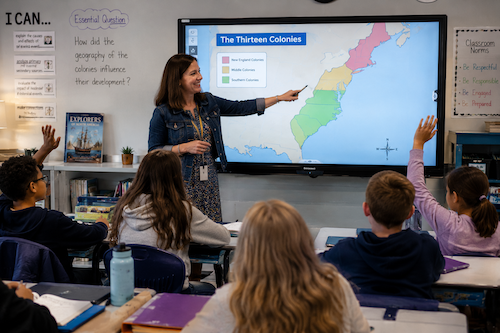
# Teaching Curiosity First: How One Massachusetts Teacher Reframes Fifth-Grade History
A Massachusetts fifth-grade teacher with 26 years in the classroom argues for a fundamental shift in how schools approach social studies: prioritize curiosity over coverage, debate over memorization, and student-led inquiry over textbook compliance.
The teacher describes a classroom culture built on argument, wonder, and bringing history into students' lives in tangible ways. This approach stands in contrast to traditional social studies instruction, which often emphasizes rote learning of names, dates, and places. Instead of asking students to absorb disconnected facts, this model treats every fifth grader as a potential researcher with genuine questions about the world.
The philosophy stems partly from personal experience. The teacher admits to hating social studies as a child, likely due to the passive, fact-heavy instruction common in American schools. That early negative experience shaped her commitment to creating something different for her own students. Rather than perpetuating the cycle, she built classroom structures that encourage debate, challenge assumptions, and allow students to pursue topics that genuinely intrigue them.
The case for curiosity-first teaching rests on solid educational theory. When students feel ownership over their questions, engagement rises. When they argue about historical events or contemporary problems grounded in history, they develop critical thinking skills that matter far beyond the classroom. Research in cognitive psychology consistently shows that intrinsic motivation driven by genuine interest produces deeper learning than external rewards or pressure to pass tests.
This approach also addresses a real problem in elementary social studies: the "mile wide, inch deep" curriculum problem. Many states and districts demand coverage of enormous amounts of material, leaving teachers little time to explore topics deeply or allow student inquiry to breathe. A curiosity-first model flips that priority. A single historical event might become the basis for weeks of investigation, debate, primary source analysis, and community research.
The practical mechanics matter too. A student curious about how a local business started might conduct interviews with owners, examine historical records, and compare the story to broader economic patterns they're learning. Another student puzzled by why certain neighborhoods look the way they do might investigate zoning decisions, migration patterns, and demographic change. These inquiries naturally integrate literacy, math, and analytical skills while grounding social studies in students' immediate experience.
This approach requires teachers to relinquish some control. Lesson plans become responsive rather than rigidly scripted. Student questions drive the curriculum rather than a predetermined scope and sequence. That flexibility demands expertise, confidence, and trust in student learning. It also requires schools to resist the temptation to narrow curriculum to testable content or "essential facts."
The timing of this philosophy matters. Fifth grade is an age when students still maintain natural curiosity while developing the ability to handle more complex ideas. Framing social studies as an inquiry-driven field rather than a collection of facts to master builds habits of mind that serve students in middle school, high school, and beyond.
Other educators increasingly recognize this value. Project-based learning, inquiry-based curricula, and student-centered approaches have gained traction in elementary and middle schools. Yet traditional, textbook-driven instruction remains prevalent, particularly in under-resourced districts.
The case this teacher makes is not that facts don't matter. Rather, facts gain meaning when students pursue questions that compel them. When fifth graders see themselves as young researchers rather than passive recipients of information, they develop a different relationship with learning itself.