# How Educators Can Transform Escape Rooms Into Powerful Learning Tools
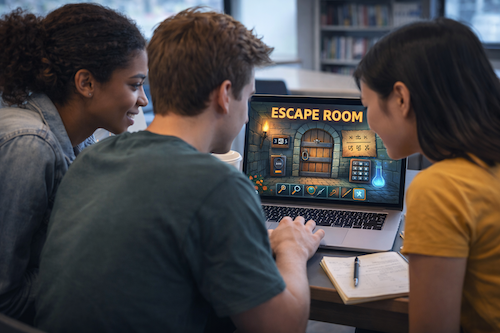
Escape rooms are moving beyond entertainment venues and into classrooms. The puzzle-based, time-constrained format naturally aligns with learning objectives when teachers design them strategically. Five core principles determine whether an escape room becomes a throwaway activity or a meaningful teaching tool.
The first key involves anchoring the escape room experience to curriculum standards. Rather than creating standalone puzzles disconnected from what students are studying, educators should embed content from their units directly into the challenges. A history class studying the American Revolution could design clues around primary source documents. A physics class could require students to solve force and motion problems to unlock the next room. This connection ensures the activity reinforces learning goals rather than distracting from them.
The second principle centers on applying the Engineering Design Process and the Process of Scientific Inquiry to escape room construction. These frameworks provide structure that moves beyond random riddles. When teachers use the Engineering Design Process, they define a problem for students to solve through a series of logical steps. The Process of Scientific Inquiry asks students to observe, hypothesize, test, and analyze. Both approaches create escape rooms where thinking processes mirror how professionals actually solve problems in their fields.
Collaborative design forms the third key. Escape rooms work best when students must pool different skills and knowledge. One student might excel at pattern recognition, another at reading comprehension, a third at spatial reasoning. Teachers should structure puzzles so no single person can solve everything alone. This forces genuine teamwork and ensures all students contribute meaningfully to success.
The fourth principle involves building in reflection time. When students finish an escape room, the learning often stops. Teachers who add debriefing sessions transform the experience from entertainment into genuine learning. Asking students what strategies worked, which puzzles confused them, and how they'll apply this thinking to future problems deepens understanding and transfers skills beyond the classroom walls.
Finally, the fifth key addresses accessibility and inclusivity. Escape rooms can become barriers for students with disabilities or learning differences if designers don't plan carefully. Puzzles that rely solely on sight, sound, or physical manipulation exclude students. Teachers should offer multiple ways to access each clue. A puzzle could be visual, auditory, tactile, or reading-based. Providing alternative formats ensures all students participate fully.
Escape rooms tap into powerful motivators. Time pressure creates urgency. Mystery generates curiosity. Collaboration builds community. Success triggers dopamine release. When teachers harness these natural motivators through intentional design tied to learning outcomes, escape rooms become tools for deeper understanding rather than novelty activities.
The format works across grade levels and subjects. Elementary teachers use escape rooms for phonics and multiplication facts. Middle school educators embed them in social studies and science units. High school teachers create complex, multi-stage experiences requiring synthesis of advanced content. The mechanics remain consistent, but the rigor scales.
Schools implementing classroom escape rooms report increased student engagement and improved retention of content. Students remember not just the answers to puzzles but the problem-solving processes they used. They practice communication, persistence, and creative thinking. These transferable skills matter as much as any single subject-area fact.
The key difference between a wasted class period and transformative learning lies in intentional design. Teachers who align escape rooms to standards, use proven inquiry frameworks, prioritize collaboration, allow reflection, and ensure accessibility create experiences that stick with students long after the final lock opens.