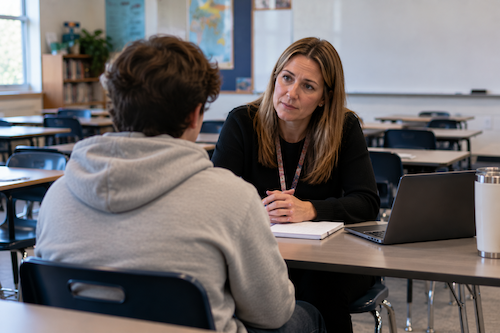
Teachers spend an average of eight hours each week supporting student mental health and well-being, according to a RAND report released in 2026. That work represents 17% of their total working hours.
Nearly all K–12 public school teachers provide at least one type of student mental health support, such as checking in on students, collaborating with counselors or social workers, or helping students navigate personal challenges. The findings come from the 2026 State of the American Teacher Survey, which included 829 K–12 public school teachers surveyed from January to February 2026.
Teachers who frequently provide more mental health support report higher emotional costs from teaching. Sixty-two percent of teachers who frequently provided mental health supports reported high emotional costs, compared with 38% of teachers who did not frequently provide any supports.
Half of teachers surveyed said it had become harder to provide support since fall 2024. They cited limited school resources, economic hardship among families, and a divisive political climate as reasons.
Teachers who said providing support had become harder were more likely to report frequent job-related stress, difficulty coping with stress, symptoms of depression, and burnout.
More than 90% of teachers said their schools faced at least one challenge affecting student well-being. Teachers most commonly identified student apathy, lack of preparedness to learn, lack of parental involvement, and student absenteeism as serious problems.
High school teachers reported more student well-being challenges than elementary teachers. Fifty-nine percent of high school teachers said their schools had five or more moderate or serious challenges, compared with 42% of elementary teachers. High school teachers were also less likely to provide regular mental health supports. Twenty-four percent of high school teachers did not provide any of the surveyed supports weekly, compared with 9% of elementary teachers.
RAND recommends that mental and behavioral health program providers develop more adolescent-specific resources and curricula for secondary teachers. The report also recommends that districts connect students and families with integrated services such as mental health care, food assistance, and housing support through wraparound supports or community schools.