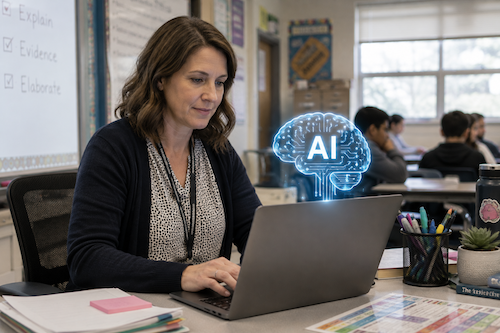
# How Teachers Can Use AI Strategically This School Year
The debate over whether artificial intelligence belongs in classrooms has shifted. Educators are no longer asking if they should use AI. They are asking how to use it well.
This shift reflects a broader acceptance that AI tools are now embedded in the educational landscape. Teachers report experimenting with AI-generated lesson plans, automated grading systems, and personalized learning platforms. Rather than resist these tools, schools are developing frameworks to deploy them effectively.
Five practical applications have emerged as most valuable for teachers this school year.
**Personalized Learning Paths**. AI can analyze student performance data and recommend customized learning sequences. Systems like adaptive learning platforms adjust difficulty levels based on real-time comprehension. This allows teachers to differentiate instruction without creating entirely separate curricula. A student struggling with fractions receives targeted practice, while advanced learners accelerate to new concepts.
**Administrative Burden Reduction**. Grading consumes substantial teacher time, particularly for written assignments. AI-powered grading assistants provide preliminary feedback on essays, quizzes, and worksheets. Teachers then review and finalize grades, maintaining quality control while reclaiming hours each week. This matters because teachers report grading as a primary source of burnout.
**Lesson Planning Support**. Generative AI tools help teachers draft lesson outlines, create discussion questions, and develop assessment items. Teachers input their learning objectives and student demographics, and AI generates starting materials they then refine. This accelerates planning cycles without removing teacher judgment about what works for their specific students.
**Real-Time Classroom Support**. Some schools deploy AI chatbots that answer routine student questions outside class time. This extends teacher availability for homework help and clarification without requiring teacher presence. The bot handles common procedural questions, freeing teachers to focus on conceptual instruction when students need human interaction most.
**Data-Informed Instruction**. Learning management systems with AI analytics identify students at risk of disengagement before they fall significantly behind. These systems flag attendance patterns, assignment submission trends, and assessment performance. Teachers then intervene with targeted support conversations or adjusted pacing.
However, successful implementation requires guardrails. Schools must address data privacy, ensuring student information remains protected. Teachers need training on AI tool limitations. Not every AI output is accurate or appropriate. Students also need explicit instruction about when and how AI is being used in their classes, and what it means for their learning.
The conversation has matured beyond novelty. Districts like those in California and Texas now include AI literacy in teacher professional development. They establish policies about acceptable uses, student data protections, and bias mitigation.
Experts emphasize that AI amplifies teacher capability rather than replacing it. The technology handles routine tasks and identifies patterns. Teachers interpret that information, make instructional decisions, and provide the relationships and mentorship that drive real learning.
This school year, teachers entering classrooms with intentional AI strategies report feeling more organized and better able to target instruction to individual students. The technology works best when teachers remain at the center, making decisions about what their students need and how to deliver it.