# NSW's Largest Coal Mine Expansion Raises Questions About Government Approval Process
New South Wales authorities have approved an expansion of the state's largest coal mining operation in the Hunter Valley, but environmental groups and local residents argue the government fundamentally miscalculated the environmental and economic trade-offs involved in the decision.
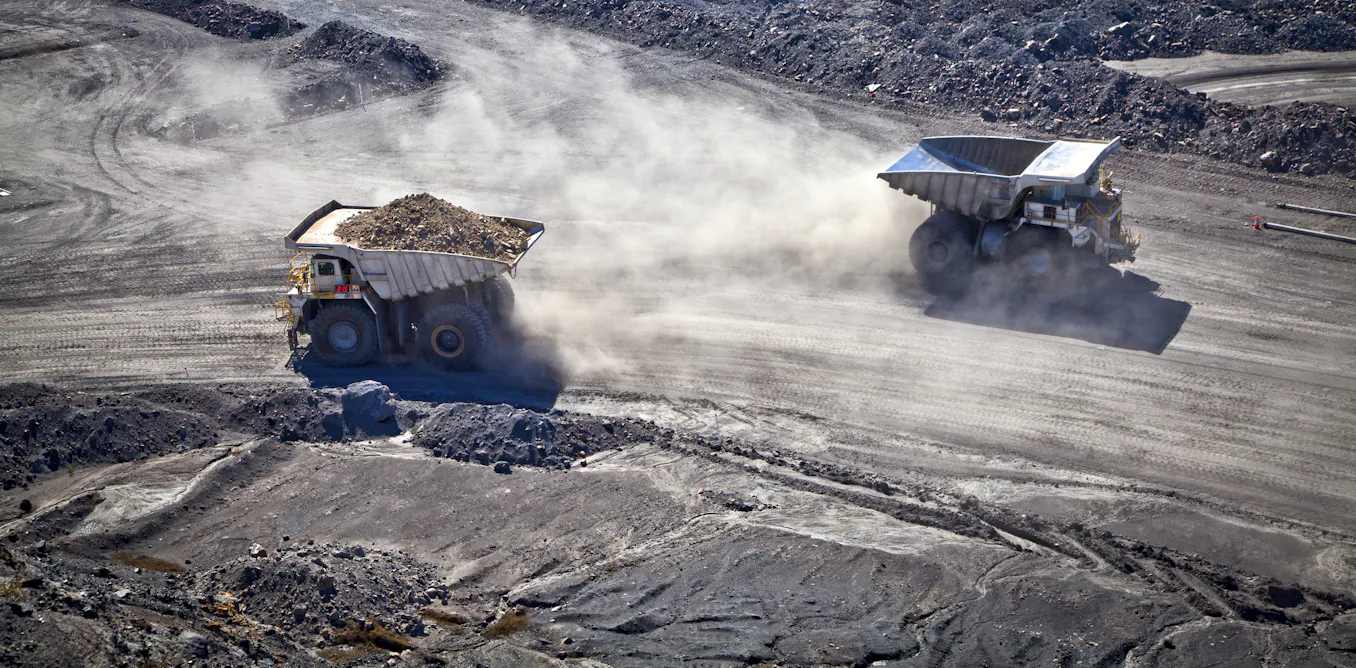
The Hunter Valley, located north of Sydney, remains Australia's largest coal-producing region despite the country's shift toward renewable energy. The approved expansion allows the mine to increase extraction capacity, extending its operational life and deepening its footprint across the region. The project received government sign-off after what authorities described as thorough environmental impact assessment and community consultation processes.
Critics contend that state regulators underestimated several costs. Environmental advocates point to understated projections about air and water quality impacts on nearby communities. Agricultural groups worry about groundwater depletion in an area where farming depends on reliable water access. Health researchers have questioned whether air pollution assessments adequately accounted for respiratory illness risks in surrounding towns.
Local residents report that promised mitigation measures from previous mining projects failed to materialize or proved ineffective. Dust suppression efforts have not prevented coal particles from reaching homes kilometers away. Water management pledges have not offset measurable declines in local aquifer levels. These broken commitments shape skepticism about new assurances tied to the expansion.
The approval also reflects a calculation about jobs and tax revenue that opponents dispute. While the mine employs roughly 1,500 workers directly, the expansion's economic benefit to the region may not justify its environmental cost, critics argue. Coal industry employment in NSW has declined over the past decade despite previous expansions, suggesting that job creation claims rest on optimistic assumptions about coal demand.
State authorities defended the approval process, citing compliance with environmental protection legislation and economic benefit assessments required under NSW law. They noted that conditions attached to the expansion require ongoing monitoring and remediation.
The dispute raises broader questions about how governments weigh short-term economic interests against long-term environmental risks. Australia's national climate commitments require emissions reductions that stand in tension with coal industry expansion. NSW policies aimed at transitioning away from coal have not prevented approval of projects that extend coal mining operations into the 2040s.
Environmental economists point out that approval processes often fail to account for external costs, or "externalities," that mining imposes on communities and ecosystems but do not appear in company balance sheets or government tax projections. Air pollution costs, water contamination risks, and health impacts typically fall on residents rather than on coal operators.
The Hunter Valley expansion illustrates how regulatory decisions shape the pace and scale of Australia's energy transition. Coal mining in NSW continues to face both political support from regional communities and pressure from environmental advocates and climate-focused policymakers. The tension between these forces will likely define Australian energy policy for years ahead.