# When Private Contractors Run Humanitarian Aid, Gaza Residents Lose
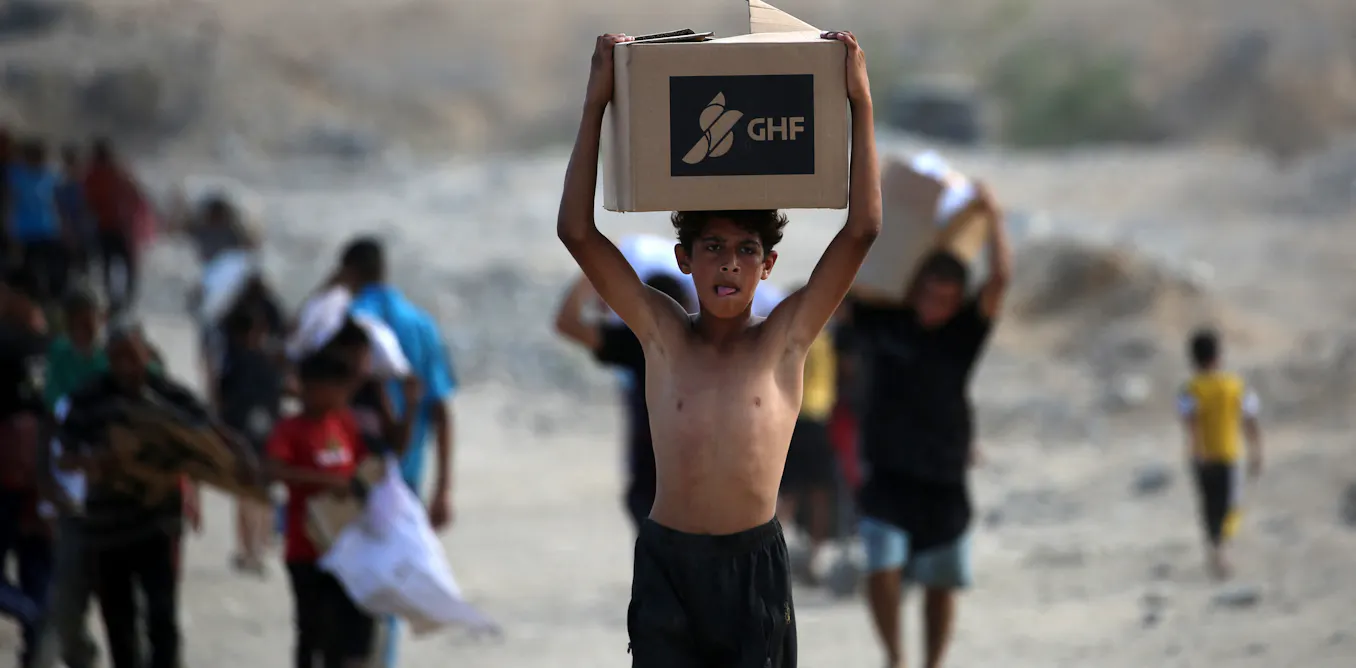
The Gaza Humanitarian Foundation, a US government-backed initiative designed to deliver aid to Gaza residents, exemplifies a broader failure: outsourcing emergency humanitarian work to private corporations undermines the people who need help most.
New research examining this foundation reveals that privatizing aid distribution creates inefficiencies, delays, and gaps that hit vulnerable populations hardest. When corporations manage what should be public services, profit motives compete with humanitarian needs. The result in Gaza has been measurable harm to civilians already experiencing severe shortages of food, water, medicine, and shelter.
The Gaza Humanitarian Foundation operated under a model where the US government contracted private companies to coordinate and deliver aid rather than managing distribution directly or through established nonprofits with on-ground expertise. This outsourcing approach reflects a broader trend in global development: treating disaster response as a business opportunity rather than a public responsibility.
The research documents specific failures. Aid reached fewer people than intended. Distribution networks proved slower than direct government or NGO models. Communities reported receiving incomplete shipments and irrelevant supplies. Private contractors prioritized cost-cutting over reach, creating coverage gaps in the most isolated areas where need is highest.
Privatization introduces another problem: accountability becomes diffuse. When aid passes through multiple corporate layers, determining who failed which communities becomes difficult. Residents cannot easily access complaints processes. Contractors face limited consequences for poor performance. In Gaza, where infrastructure is already fractured and trust in institutions weak, these opacity problems compound civilian suffering.
The research also identifies financial inefficiency. Administrative overhead consumed resources that should have reached people directly. Corporate profit margins reduced the dollar value of aid. Money earmarked for humanitarian work instead paid shareholder returns and executive compensation.
This matters beyond Gaza. Humanitarian crises will continue. The Horn of Africa, Ukraine, Syria, and other regions experiencing conflict or disaster all rely on aid systems. The model chosen for delivering that aid determines whether it reaches vulnerable populations or gets caught in corporate bureaucracy.
The research does not argue that all private sector involvement in aid fails. Some contractors provide specialized services effectively. The problem emerges when core functions—needs assessment, supply chain logistics, community engagement, distribution—move entirely into corporate hands without public oversight and without prioritizing speed and universal access over profit.
The study presents evidence that direct government aid delivery, combined with established humanitarian organizations like the International Committee of the Red Cross, World Food Programme, and local NGOs, achieves better outcomes. These models maintain transparency, respond faster to changing conditions, and keep humanitarian values central to decision-making.
For policymakers, the Gaza Humanitarian Foundation failure teaches a clear lesson: privatization of emergency aid creates preventable suffering. Future humanitarian responses should prioritize public institutions and experienced humanitarian organizations over corporate contractors seeking contracts. When people face starvation and disease, speed and reach matter more than cost control and corporate structure.
The world rebuilt its humanitarian system after World War II partly because decision-makers recognized that aid works best when those delivering it answer to populations receiving it, not to shareholders. Gaza's experience confirms that principle remains valid.