# Early Childhood Classrooms Focus on Emotional Well-Being as Anxiety Rises in Young Students
Early childhood classrooms across the country are shifting their focus to address rising anxiety and emotional distress in young learners. Teachers and administrators report that children entering preschool and kindergarten show higher baseline stress levels than previous generations, prompting schools to redesign physical spaces and teaching practices around emotional regulation and psychological safety.
The challenge is real. Young children arrive at school with measurable increases in worry, difficulty with transitions, and trouble managing frustration. These emotional barriers interfere with learning before academic instruction even begins. Educators recognize that a child struggling with anxiety cannot absorb phonics instruction or participate in peer play. The emotional foundation must come first.
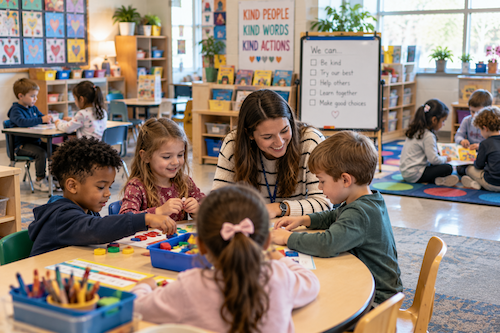
Schools are responding with concrete design changes. Classrooms now incorporate quieter zones with softer lighting, reduced visual clutter, and designated calm-down spaces. These design choices address sensory overload, a common trigger for young children's emotional dysregulation. Some classrooms use weighted blankets, noise-dampening panels, or soft seating areas that signal safety. The logic is straightforward: predictable, orderly environments reduce anxiety triggers and create space for learning.
Educators are also training themselves in trauma-informed practices. This means understanding that a child's meltdown or withdrawn behavior often reflects something happening at home or a developmental capacity gap, not defiance. Teachers trained in these approaches respond with validation rather than punishment. They name emotions for children ("You seem frustrated") and teach coping strategies (deep breathing, counting, movement breaks) before behavioral issues escalate.
Daily routines now incorporate emotional literacy. Circle time includes conversations about feelings. Stories feature characters working through disappointment or fear. Teachers model language for naming emotions and problem-solving. The goal is to help children recognize their internal states and develop a vocabulary for distress before they act it out through behavior.
These shifts reflect broader recognition that early childhood sets the trajectory for school success and mental health. Research consistently shows that children who develop emotional regulation skills in preschool and kindergarten perform better academically, have stronger peer relationships, and experience fewer behavioral referrals. By age five, patterns are becoming established.
Parental anxiety also factors into this landscape. Many families experienced pandemic-related disruptions during critical developmental windows. Some children missed full preschool years. Others spent formative months in isolation. Teachers report seeing attachment challenges, difficulty with separation, and heightened vigilance in young students as a result.
Schools are extending this work into families. Some programs train parents in the same emotional regulation strategies used in classrooms. When adults at home and school speak the same language about feelings and use consistent tools, children internalize these skills faster. Parent workshops on recognizing anxiety signs and managing their own stress become professional development investments.
The resource question looms. These practices require training time, smaller class sizes when possible, and thoughtfully designed spaces. Schools with tight budgets struggle to implement comprehensive approaches. Districts with resources hire mental health consultants to train staff and redesign classrooms. Others rely on creative low-cost solutions: corner cushions, painted accent walls, nature-based outdoor spaces.
Early childhood educators emphasize this is not about permissiveness or avoiding limits. Structure and clear expectations remain essential. The difference lies in how teachers deliver boundaries. A child told "We use gentle hands" receives the same rule as one who hears "You're being bad," but the emotional impact differs significantly. One preserves dignity and invites cooperation. The other damages the safety young learners need to thrive.