# How Germany's Far-Right Uses Coded Symbols to Evade Nazi Imagery Laws
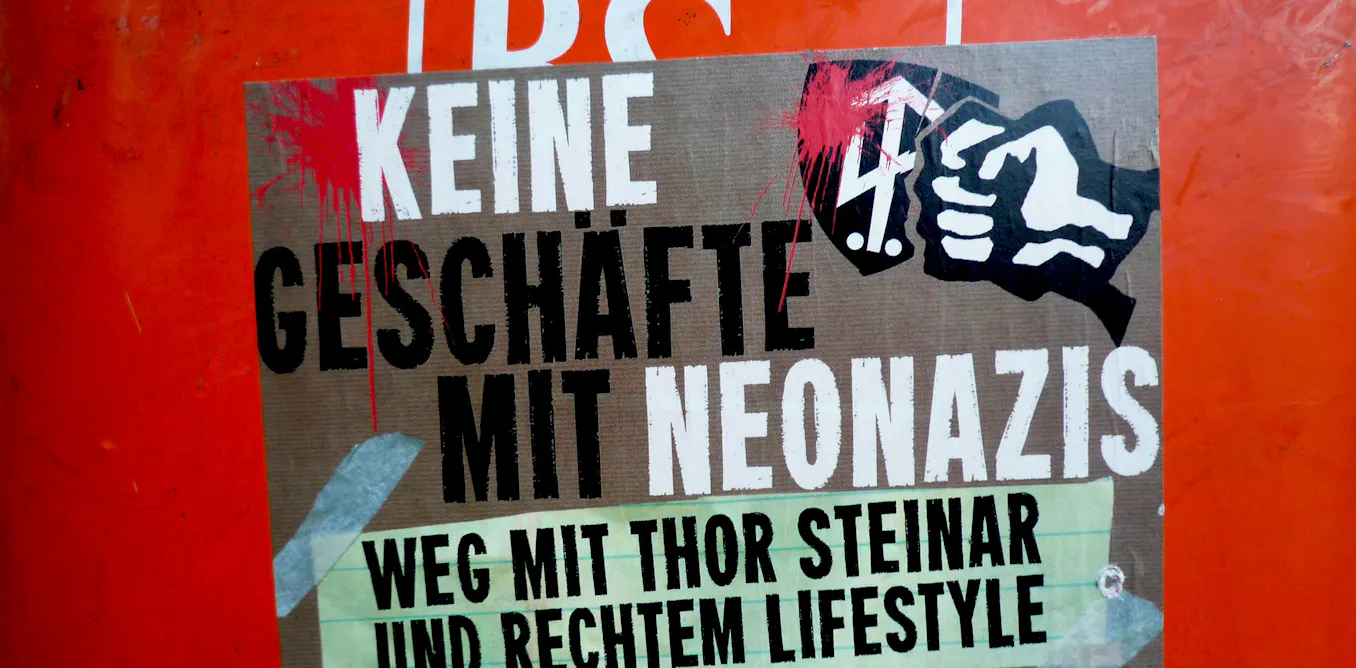
Germany enforces some of the world's strictest laws against Nazi symbolism, criminalizing swastikas and SS runes across nearly all contexts. The extreme right has responded by developing an elaborate system of coded language, emojis, and fashion choices that communicate Nazi ideology while technically sidestepping legal restrictions.
This adaptation reveals a persistent challenge for regulators: enforcing laws against hate speech when symbols evolve faster than legal frameworks can address them. For educators and parents, the coded nature of these symbols means hate speech now often appears disguised in ways that look innocuous to the untrained eye.
German law since 1960 bans Nazi symbols outright. Section 86a of the Criminal Code makes it illegal to distribute, produce, or possess swastika imagery, SS insignia, and other Nazi-era emblems. The law extends beyond historical documentation to nearly all contemporary uses. This strict legal landscape pushed extremist movements to create workarounds.
Modern far-right supporters now use specific emoji combinations, numbers with hidden meanings, and dog-whistle fashion brands to signal allegiance without triggering legal consequences. Clothing labels associated with Nazi ideology circulate within extremist communities. Certain numeric codes reference dates or figures from Nazi history. These substitutions function as insider language, allowing adherents to identify one another while maintaining plausible deniability in legal proceedings.
The emoji approach proves particularly adaptable. Far-right users combine seemingly random emojis to represent banned symbols or extremist concepts. A young person sharing these combinations on social media platforms may evade automated content moderation systems designed to catch direct Nazi imagery. The coded nature also allows extremists to test whether someone understands the reference, functioning as a recruitment screening mechanism.
This phenomenon matters beyond Germany. Researchers tracking online extremism globally observe similar patterns across multiple countries with strict hate speech laws. The United States, with First Amendment protections, faces different regulatory challenges but identical symbolic adaptation. The speed of symbol evolution outpaces policy development in most democracies.
For schools and parents, the practical challenge intensifies. Educators must now understand not only historical Nazi symbolism but also its modern coded variants. German schools incorporate Holocaust education into curricula, yet contemporary students may encounter these newer symbols without recognizing their meaning. Training teachers and parents to identify coded extremist communication becomes as vital as traditional hate speech awareness.
Digital platforms face mounting pressure to address coded content. Automated systems catch explicit violations but miss symbolic nuance. Human moderators require specialized training to identify context-dependent coded language. TikTok, Instagram, and other platforms popular with teenagers serve as distribution channels for these symbols, though moderation policies remain inconsistent.
The German government continues updating enforcement approaches. Police units develop expertise in decoding extremist symbols. Youth outreach programs work to counter recruitment tactics that exploit coded imagery. However, the cat-and-mouse dynamic persists. Each enforcement action prompts extremists to develop new variants.
The broader lesson extends beyond Germany. Legal restrictions on hate speech, while important, operate within constraints. When symbols become criminalized, motivated groups innovate to maintain communication networks. Effective counterextremism requires combined approaches: legal enforcement, digital literacy education, community awareness training, and rapid adaptation by platforms and regulators. Schools and families must engage actively rather than assume traditional knowledge of hateful symbolism provides sufficient protection against modern variants.