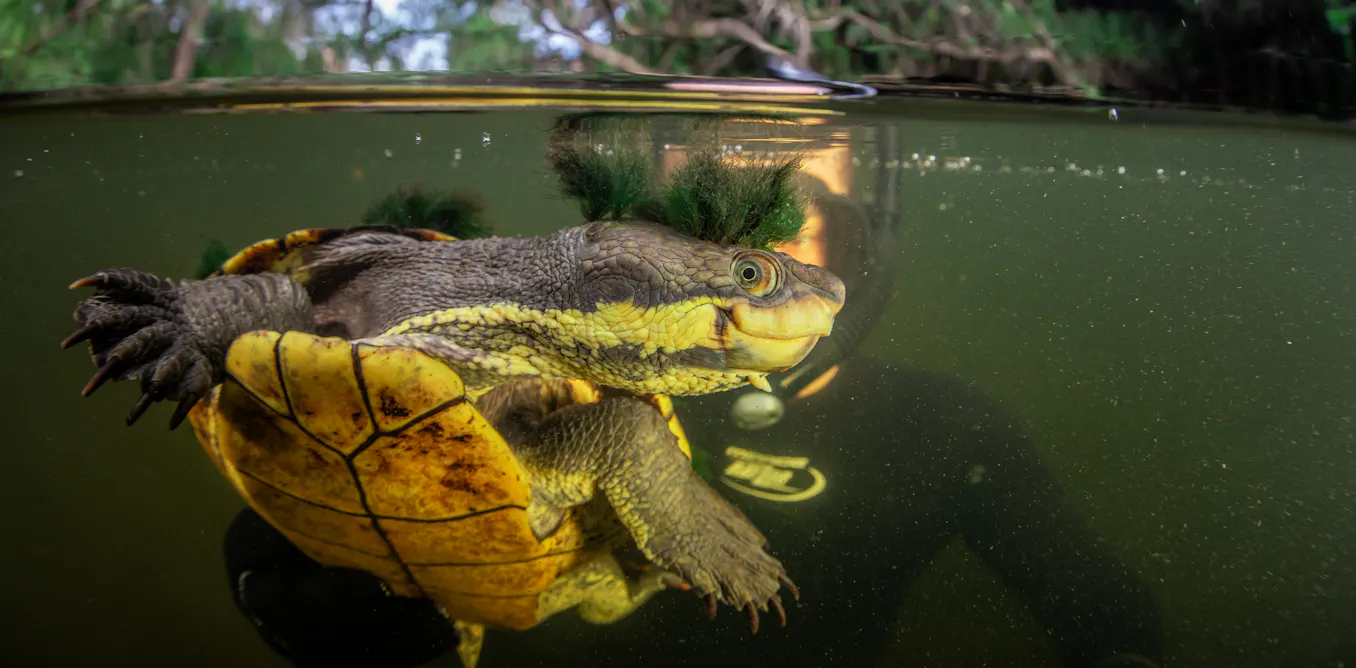
# Native Turtle Species Face Survival Threat from Competing Relative in Australian River
A competition for survival is unfolding in a coastal Australian river between two native turtle species, but one creature's presence there exposes a homegrown conservation problem. The situation highlights how native animals can threaten other native species when they occupy habitats where they don't naturally belong.
The conflict involves Australian freshwater turtles in an ecosystem where species distribution has shifted due to human activity. One species thrives in the river system while the other struggles to maintain a foothold. The competing turtle is native to Australia but not native to this particular waterway, creating an imbalance that mirrors conservation challenges seen globally when species are displaced or introduced outside their historical ranges.
This case demonstrates that conservation threats do not always arrive from foreign shores. Sometimes they emerge from within a nation's own fauna. When native species establish populations in ecosystems they did not historically inhabit, they can outcompete local species for food, nesting sites, and other resources essential for survival.
River systems along Australia's coast face multiple stressors. Water extraction, pollution, habitat degradation, and altered flow patterns have already weakened ecosystems. The arrival or expansion of a non-native-to-the-area turtle species creates additional pressure that native turtles in that location cannot withstand.
The turtles compete for limited resources in a fragmented habitat. Coastal rivers in Australia support only so many turtles. When a competitor enters that niche, the original inhabitant faces reduced access to basking sites, nesting grounds, and food sources. Female turtles particularly need specific conditions to lay eggs. Males need territories to establish dominance. Every resource matters in survival.
Conservation managers now face a difficult choice. Intervention could involve removing the competing species, but removal efforts are labor-intensive and only work if conducted consistently over years. Habitat restoration might benefit both species if resources expand, but rivers already stressed by water demands offer limited room for expansion. Protected areas within the river could be designated for the struggling species, though enforcement proves challenging.
The broader lesson concerns how conservation priorities shift when native animals collide. Protecting one species may require controlling another, both native to Australia. This creates ethical questions about which animals deserve protection and how much intervention is justified.
These coastal river systems support numerous species beyond turtles. Birds, fish, and aquatic plants all depend on healthy water conditions. The turtle competition reflects larger ecosystem dysfunction. Restoring environmental flows, reducing pollution, and expanding habitat corridors would benefit multiple species simultaneously, though such efforts require substantial funding and political commitment.
The situation underscores why habitat protection matters at the species level. Preserving the historical ranges of native animals prevents the ecological conflicts now emerging in this Australian river. As development continues along coastlines, such conflicts will multiply unless conservation strategies account for where species belong, not simply whether they are native to the country.