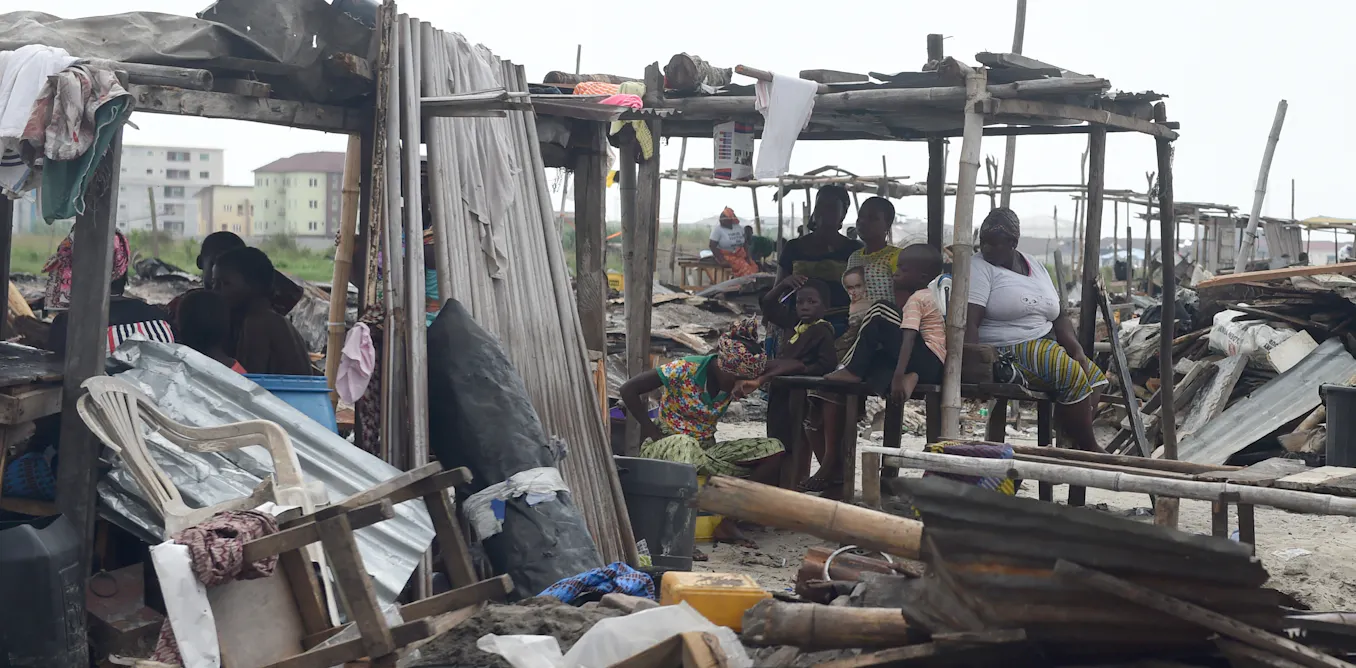
# Lagos Demolition Campaign Risks Climate Resilience Built by Informal Communities
The demolition of informal settlements in Lagos carries an unexamined cost. Residents living in dense waterside communities have engineered sophisticated systems for managing flooding, storm surge, and rising sea levels. Destroying these neighborhoods may eliminate the city's most practical climate adaptations.
Lagos sits on Nigeria's coast, vulnerable to intensifying coastal erosion and flood events linked to climate change. Official responses have focused on removing informal settlements described as slums. Yet researchers and community observers note these neighborhoods represent decades of collective problem-solving around water management and disaster preparedness.
Residents whose homes cluster along waterways, canals, and shorelines have built organized systems for living with climate change. These include informal drainage networks, elevated building techniques, early-warning systems passed between neighbors, and community-based rescue protocols. Residents maintain boats for emergency transport. They monitor water levels collectively. They know which streets flood first and which routes remain passable during storms.
The informal settlements also provide affordable housing for millions of workers employed in Lagos' ports, markets, and service sectors. Demolition displaces families without offering replacement housing in accessible locations. Workers relocated to distant developments face longer commutes and higher transport costs that outstrip wages earned in informal-sector jobs.
City planners argue that formal development with engineered drainage, building codes, and zoning laws offers superior protection. Yet formal infrastructure in Lagos routinely fails during major rain events. Pipes rupture. Pumping stations malfunction. Roads designed for drainage instead channel water into residential areas. Formal systems require maintenance budgets that Lagos government consistently underfunds.
The demolition approach treats informal residents as obstacles to modernization rather than knowledge holders. Government agencies do not consult with waterside communities about climate adaptation. They do not document the management systems these residents have developed. They do not factor residents' experience into city planning.
International climate adaptation funding increasingly flows into Lagos for coastal defense projects. These funds support seawalls, mangrove restoration, and early-warning systems. Many of these initiatives would succeed faster with input from informal settlement residents who have already implemented community-based versions of these approaches.
Advocates argue for a different path. Rather than demolition, this approach includes upgrading informal settlements while preserving community structures. It means formalizing the drainage systems residents have built. It means incorporating resident knowledge into official flood preparedness plans. It means providing secure tenure so residents invest in improvements without fear of displacement.
Some Lagos neighborhoods have pursued this model through participatory planning. Results show that residents invest in better building materials and environmental improvements when they know demolition will not follow. Community flood response times improve with official recognition of resident leadership. Water management becomes more effective when formal and informal systems work together.
The demolition campaigns continue despite this evidence. Each neighborhood cleared removes both homes and climate adaptation knowledge. The city grows more formally planned and less resilient. Millions of residents lose not just housing but also the communities that helped them survive Lagos' increasingly severe weather. Building new formal infrastructure takes years. Restoring lost community knowledge takes generations, if it happens at all.