# How Heat on the Tibetan Plateau Connects to California Storms
Scientists have discovered a direct link between warming temperatures on the Tibetan Plateau and severe winter storms battering California's coast thousands of miles away. A new study traces how early winter heating in Tibet alters the jet stream, ultimately steering powerful weather systems toward the Pacific coast of the United States.
The research reveals a chain reaction in atmospheric circulation. When the Tibetan Plateau experiences higher-than-normal temperatures during early winter, the resulting changes in air pressure and temperature gradients shift the position and intensity of the jet stream. The jet stream, a river of fast-moving air that guides weather systems across the Northern Hemisphere, becomes more prone to creating deep troughs that channel storms directly toward California.
This discovery holds immediate practical value for meteorologists. Understanding these teleconnections, the term scientists use for distant weather relationships, could improve forecast accuracy for California storms weeks in advance. Current weather prediction models often struggle to predict storms beyond 10 days. If forecasters can identify warming patterns on the Tibetan Plateau early in the season, they gain additional lead time to warn communities about approaching severe weather.
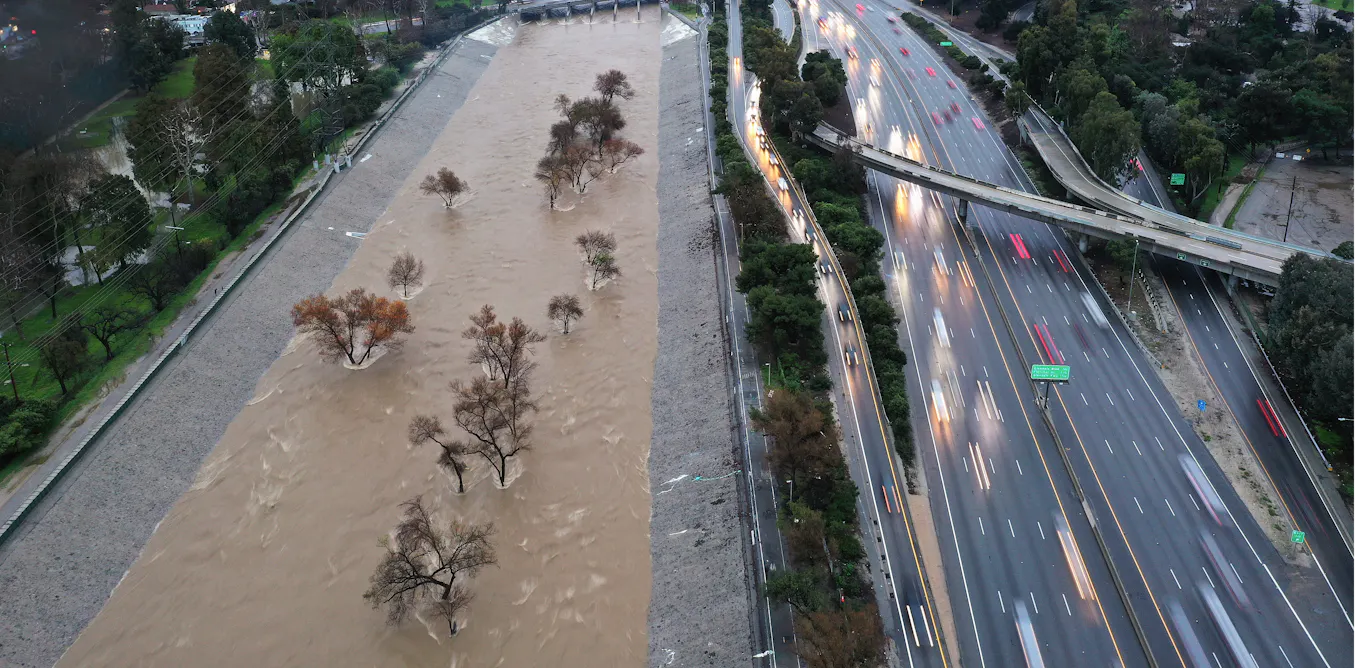
The mechanism works through the Asian-Pacific climate pattern. Heat on the plateau strengthens the contrast between warm air over Tibet and cold air to the north. This temperature gradient influences the position of the subtropical jet stream, which affects pressure systems across the Pacific. When these conditions align correctly, they favor the development of atmospheric rivers, those narrow bands of moisture that deliver intense precipitation to California. Some of California's most damaging floods and mudslides have resulted from atmospheric rivers.
Climate change adds urgency to understanding this connection. As global temperatures rise, the Tibetan Plateau warms faster than most other regions on Earth, a phenomenon called the "Third Pole amplification" because the plateau sits at such high altitude. Earlier and more intense heating on the plateau could alter storm patterns for California and other western states. Scientists need to determine whether climate change will increase the frequency of these teleconnection events or shift them in ways that change where storms ultimately land.
The study joins growing research on how distant regions influence local weather. Scientists have established similar teleconnections between Arctic sea ice extent, tropical Pacific ocean temperatures, and North American weather. These relationships challenge the notion that weather patterns develop independently across regions. Instead, a warming planet reshapes global circulation patterns in ways that connect seemingly unrelated places.
For California residents and water managers, these findings offer both opportunity and concern. Better storm forecasting allows communities to prepare infrastructure and issue timely evacuation orders. However, if warming accelerates storms arriving on the West Coast, water management systems designed for historical precipitation patterns may face unprecedented challenges.
The research underscores why climate science intersects with disaster preparedness. As atmospheric dynamics shift with global warming, understanding these far-flung connections becomes essential for adaptation planning, emergency response, and protecting vulnerable populations in storm-prone regions.