# Modern Forecasting Technology Reveals D-Day Weather Challenge Was Even Harder Than Depicted in "Pressure"
The new war drama "Pressure" dramatizes one of World War II's most consequential decisions: whether to launch the D-Day invasion on June 6, 1944. The film focuses on meteorologists racing to predict whether weather conditions would allow Allied forces to cross the English Channel safely. A new analysis reveals something striking about this historical moment: even with 21st-century forecasting capabilities, making that call would have remained extraordinarily difficult.
Researchers recreated the D-Day weather forecast using modern meteorological systems and data. Their findings suggest that contemporary weather prediction tools, while vastly superior to 1944 instruments, still would have struggled with the precision required for such a consequential military operation.
In June 1944, meteorologists worked with limited satellite imagery, sparse ocean buoy data, and ground-based instruments. Group Captain James Stagg, the chief meteorologist advising Supreme Allied Commander General Dwight D. Eisenhower, faced enormous pressure. A delayed invasion meant logistical nightmares. Attacking in poor weather risked the entire operation. Eisenhower ultimately postponed the invasion one day, then committed to June 6 based on Stagg's prediction of a brief weather window.
The recreation study demonstrates that modern forecast models faced genuine limitations when applied to the same meteorological scenario. Current technology relies on satellite data, computer modeling, and global observation networks that simply did not exist in 1944. Yet even these advantages could not guarantee the precision level that a modern military commander might demand before committing hundreds of thousands of troops.
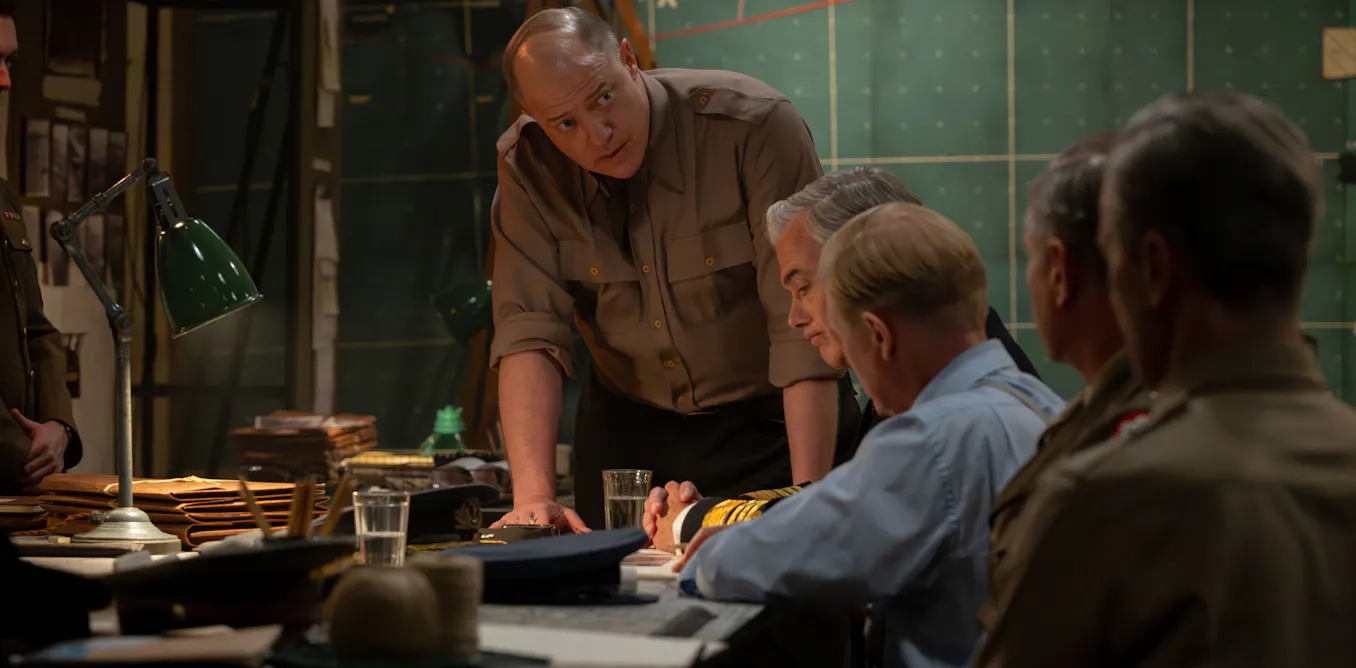
"Pressure" portrays the human drama of this decision accurately in broad strokes. The film captures the tension between meteorologists offering competing predictions, the pressure from military commanders demanding certainty, and the weight of millions of lives hanging on a weather forecast. The movie shows how Stagg and his team navigated conflicting data and incomplete information.
What the research adds is perspective. It underscores that forecasting remains an inherently uncertain science, even at its best. Weather systems involve chaotic dynamics that limit predictability despite technological advances. A 48-hour or 72-hour forecast in 1944 faced the same fundamental physics barriers that modern meteorology encounters, though today's forecasters can at least see more of the atmosphere.
This historical-technical comparison holds lessons beyond wartime. It illustrates why weather forecasters today still issue probability ranges rather than definitive predictions, why five-day forecasts carry less certainty than three-day ones, and why communicating uncertainty to the public matters. Eisenhower had to make a binary decision based on probabilistic information. Modern commanders face similar constraints.
For educators and students studying World War II, the "Pressure" film and accompanying research offer a window into how science, military strategy, and human judgment intersect under extreme conditions. The meteorological challenge of D-Day was not merely a plot device but a genuine technical and psychological problem that shaped history.
The drama in "Pressure" reflects real stakes. Even with modern tools, Stagg's fundamental challenge would persist: translating incomplete atmospheric data into actionable guidance for leaders who need certainty.