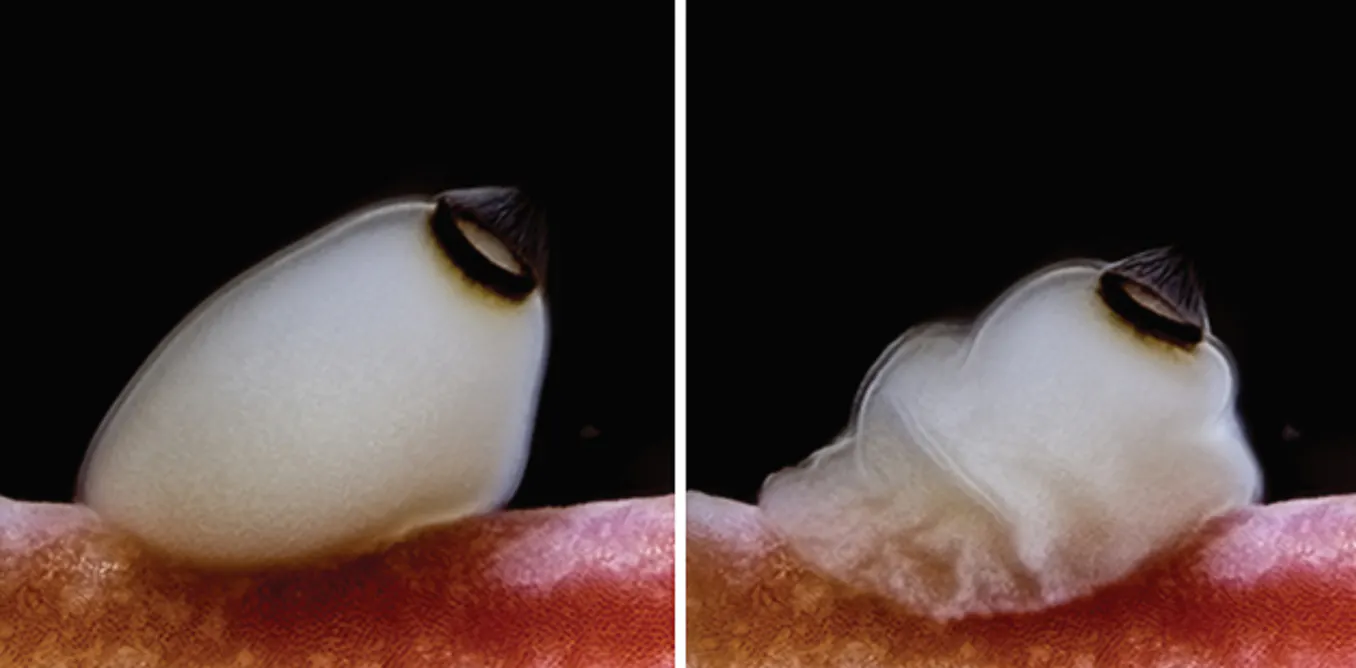
# Sea Sponges Detect Sunset to Trigger Metamorphosis, Research Shows
Sea sponges lack brains, nervous systems, and eyes, yet they respond to sunset in ways that transform their biology. New research reveals that these ancient animals use the timing of dusk as an environmental cue to initiate metamorphosis, a process that converts them from free-floating larvae into stationary adults fixed to rocks or reef surfaces.
The discovery challenges conventional assumptions about how complex behaviors evolve. Scientists have long understood that metamorphosis in marine animals often depends on chemical signals from the environment or direct contact with suitable settling surfaces. The sea sponge study adds a temporal component: light cycles themselves carry information that organisms decode without sophisticated sensory apparatus.
Sea sponges occupy a unique position in animal evolution. They emerged roughly 600 million years ago and remain fundamentally unchanged. Adult sponges filter water for food, pulling in nutrients and expelling waste. They cannot move once settled. This sedentary lifestyle makes the timing of metamorphosis critical. Sponge larvae must locate appropriate environments before committing to permanent attachment.
Sunset presents a reliable, daily marker. The shift from daylight to darkness signals stability in the water column. For larvae searching for settlement sites, dusk reliably indicates the beginning of a calmer period when currents may shift and conditions for permanent attachment become favorable. Larvae that respond to this timing cue gain a survival advantage over those settling randomly.
Researchers conducted experiments tracking sponge larvae behavior under controlled light conditions. When light cycles matched natural day-length patterns, larval sponges showed elevated rates of metamorphosis around sunset. When researchers altered light schedules or maintained constant illumination, metamorphosis rates dropped significantly. This pattern persisted across multiple sponge species tested, suggesting an ancient and conserved biological mechanism.
The molecular basis likely involves light-sensitive proteins distributed throughout sponge tissues rather than centralized in eyes or neural cells. These proteins may trigger cascades of biochemical changes that prepare larvae for transformation. The process mirrors simpler light-detection systems found in bacteria and plants, hinting at deep evolutionary roots.
Understanding sponge metamorphosis has applications beyond marine biology. Sea sponges filter tremendous volumes of water and support complex microbial communities. In some ecosystems, sponges function as ecosystem engineers, shaping reef structures and nutrient cycling. Climate change alters ocean light penetration, temperature regimes, and timing of seasonal events. If sponges depend on sunset cues for successful reproduction, changes to light patterns could disrupt recruitment rates and population stability.
Aquaculture operations working to restore sponge populations or cultivate them commercially now have concrete targets for manipulation. Controlling light exposure during larval rearing could improve settlement success rates and breeding efficiency.
The research underscores how environmental cues operate across biological scales. Even animals without brains navigate complex life transitions by reading signals written into Earth's daily rotation. That capacity for responsiveness emerges not from cognition but from biochemistry refined across hundreds of millions of years.