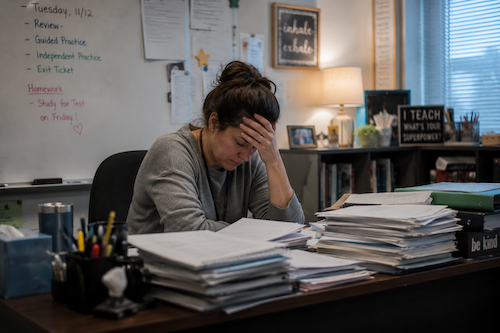
Teacher stress remains significantly higher than that of other working adults, despite a modest decline in 2026, according to recent data. Teachers continue to report worse overall well-being and greater psychological strain than peers in comparable professions.
The decline, while noteworthy, does little to address the underlying crisis in educator retention and satisfaction. Teachers report multiple compounding pressures beyond classroom duties. Many hold second jobs to supplement income, spend their own money on classroom supplies, and navigate wages that lag behind comparable professional roles.
The combination of these factors creates a perfect storm for burnout. Teachers manage large class sizes, increased behavioral challenges, administrative demands that have multiplied in recent years, and insufficient support staff. Parent and community tensions have intensified in many districts, particularly around curriculum disputes and school safety concerns. These pressures accumulate without corresponding increases in compensation or resources.
The data carries real consequences for schools. Teacher turnover costs districts substantially in recruitment and training expenses. When experienced educators leave the profession, students lose continuity and expertise. Early-career teachers face particular pressure, with many leaving within five years.
Districts across the country have attempted various interventions. Some increased pay. Others expanded mental health resources and reduced non-instructional paperwork. A few implemented class size limits. These efforts remain uneven and often insufficient to match the scale of the problem.
The 2026 decline suggests some interventions may have modest effects. However, the fact that teachers still report significantly worse stress and well-being than other professionals indicates systemic issues persist. Until schools address compensation, workload, classroom resources, and administrative burden comprehensively, burnout will continue driving talented educators from the profession. The modest improvement masks a continuing crisis that threatens educational quality and student outcomes.