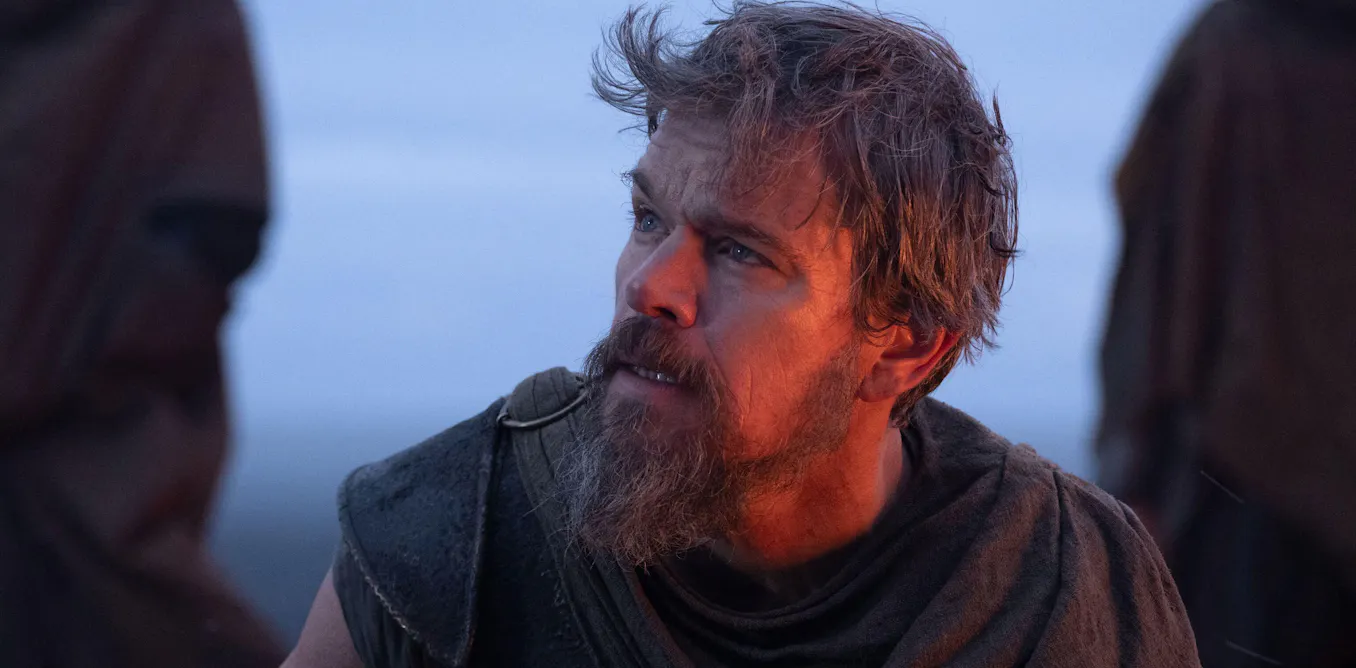
# Christopher Nolan's Odyssey Reframes Classical Heroism Through Trauma
Christopher Nolan's adaptation of Homer's Odyssey presents a fundamentally different vision of heroic triumph than classical literature traditionally celebrates. Rather than depicting Odysseus as a victorious warrior returning home to acclaim, Nolan's Odysseus carries visible psychological wounds from his decade-long journey. The film centers on survival and consequence rather than glory.
Nolan's interpretation emphasizes the cost of heroic action. Odysseus survives his trials, but the film doesn't present his survival as uncomplicated victory. Instead, Nolan forces viewers to confront what his hero has sacrificed and what others have lost because of his choices. The men who died during his journey, the years stolen from his family, the moral compromises required for survival.all weigh on the protagonist.
This approach reflects contemporary storytelling conventions around trauma and accountability. Rather than glorifying the hero's homecoming, Nolan examines how survival itself becomes burdensome. Odysseus must live with knowledge of his failures and the deaths he couldn't prevent. His return home offers no clean resolution or redemptive ending.
The film aligns with modern discussions about what heroism actually means. Classical epics often presented heroes as figures whose greatness justified their struggles. Nolan's version suggests that greatness and suffering don't automatically create moral clarity or emotional resolution. Heroes are ordinary people forced into extraordinary circumstances, carrying permanent scars.
This darker interpretation has clear resonance for contemporary audiences wrestling with complex questions about leadership, responsibility, and the human cost of achievement. Nolan's Odysseus doesn't inspire through triumph. He resonates through his damaged humanity, his struggle to reconcile who he became with who he wants to be, and his recognition that some costs cannot be repaid.