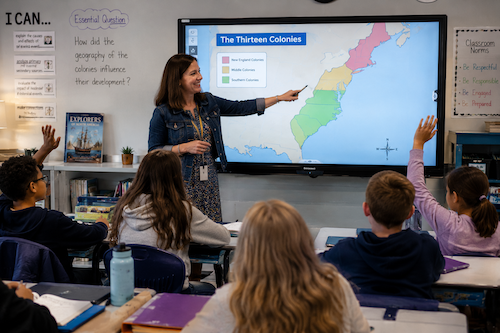
A Massachusetts fifth-grade teacher with 26 years in the classroom argues that schools should prioritize curiosity-driven instruction over traditional fact-based learning. The teacher, whose perspective frames the piece, describes building a classroom culture where students argue, wonder, and engage deeply with content rather than memorizing disconnected facts.
This approach treats elementary students as emerging researchers. Instead of lecturing or assigning textbook chapters, the teacher creates conditions where fifth graders ask questions, test ideas, and defend their thinking. History becomes active rather than passive. Students bring questions home, continue investigations outside class, and develop genuine interest in how the world works.
The teacher's own childhood experience shapes this philosophy. Having disliked social studies as a student, she consciously designed her classroom as the opposite of what she experienced. The result centers student agency and intellectual curiosity from the start.
Curiosity-first teaching aligns with broader educational research on intrinsic motivation and deeper learning. When students pursue questions they genuinely care about, they retain information longer and develop critical thinking skills. They also build confidence as learners. A fifth grader who learns to ask good questions and investigate answers becomes someone more likely to engage with complex problems in middle school, high school, and beyond.
The practical shift requires rethinking lesson design. Rather than coverage of many topics, teachers using this model go deep on fewer units. Rather than yes-or-no questions, they ask open-ended ones. Rather than assigning isolated assignments, they build projects that sprawl across weeks and connect to students' lives.
This approach does not eliminate standards or accountability. It reframes how teachers meet those standards. Evidence-gathering, argumentation, and perspective-taking appear consistently in state standards. A curiosity-first classroom develops those capacities while sparking the intellectual habits that define researchers and informed citizens.