# When STEM Lessons Are Too Easy, Students Stop Thinking
Teachers often equate student engagement with learning. A quiet classroom where students actively work on assignments feels productive. But new research shows that ease can work against actual thinking.
When STEM lessons lack sufficient challenge, students disengage mentally even while remaining behaviorally engaged. They complete tasks on autopilot. Their brains stop working to solve problems and instead follow familiar patterns.
This distinction matters. A student who finishes a math worksheet without struggle may appear focused and productive. They turn in work. Teachers mark it correct. But if the task required no real problem-solving, no hypothesis-testing, no struggle with concepts, the student's thinking did not deepen.
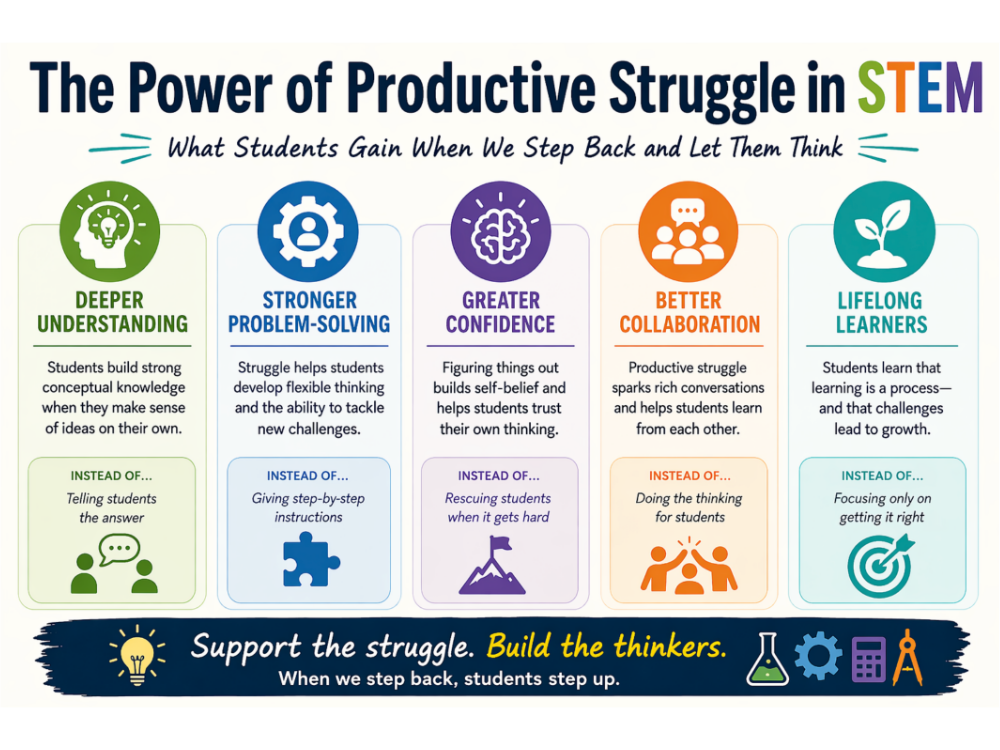
TeachThought researchers note that genuine learning in STEM requires productive struggle. Students need problems that sit just beyond their current ability, requiring them to apply knowledge in new ways. When problems feel too easy, students rush through without engaging critical thinking skills.
The research carries real implications for lesson design. Teachers must calibrate difficulty carefully. Too easy, and students shut down mentally. Too hard, and frustration takes over. The sweet spot demands problems that require students to think, make mistakes, revise, and eventually solve.
This challenge intensifies in schools serving under-resourced communities. Budget constraints and teacher shortages can push educators toward fill-in-the-blank worksheets and rote practice, which feel manageable but fail to build thinking skills. Meanwhile, well-funded schools often offer open-ended projects and complex problems that keep brains engaged.
Engagement matters, but only when paired with cognitive demand. A busy student is not always a learning student. Teachers should monitor not just whether students are working, but whether they are thinking. The difference shapes long-term achievement in STEM and beyond.