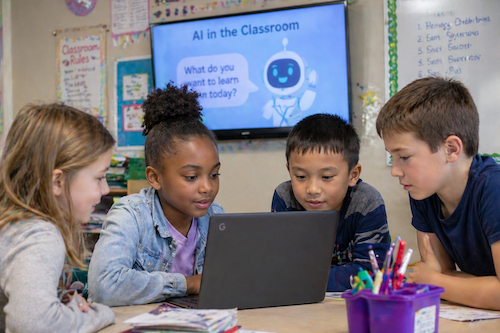
Schools across the country are deploying artificial intelligence in classrooms without consistent strategies or shared guidelines, leaving AI implementation fragmented across teachers and grade levels.
Rather than adopting district-wide policies, many schools rely on individual educators to decide how and when to integrate AI tools. This patchwork approach means a student might encounter AI-assisted writing feedback in one classroom while another teacher bans generative AI entirely. Some teachers use AI for personalized tutoring. Others employ it for administrative tasks like grading. A handful avoid the technology altogether.
The lack of coordination creates several problems. Students receive inconsistent messages about AI's role in learning. Teachers struggle without professional development or clear ethical guidelines. Schools cannot effectively monitor how AI tools collect and use student data. Parents remain uncertain whether their child's school has safeguards in place.
Districts that have established AI frameworks tend to outperform those leaving decisions to individuals. Yet most K-12 schools lack formal AI policies. A 2024 survey found that fewer than half of schools had guidelines for responsible AI use. Many administrators hesitate to mandate district policies without clearer evidence of AI's educational benefits or standardized tools that meet accessibility requirements.
The underlying challenge involves competing priorities. Teachers want flexibility to adapt tools to their students' needs. Administrators seek consistency and risk management. Parents demand transparency. Vendors promote AI solutions with varying quality and cost.
Some districts have started building comprehensive frameworks. They establish committees including teachers, administrators, parents, and instructional designers. These groups develop policies covering data privacy, appropriate use cases, teacher training requirements, and student misconduct protocols. They designate AI coordinators who support classroom adoption and monitor tool effectiveness.
Without similar leadership, schools risk perpetuating inequity. Low-resourced districts may lack access to quality AI tools while wealthier districts gain advantages. Students learn contradictory lessons about AI's trustworthiness depending on their teacher