# Teachers Positioned to Lead Learning Through AI Integration, Not Lose Ground to It
Public education faces a transformative moment as artificial intelligence and digital tools reshape classrooms. Rather than threatening teacher roles, technology amplifies educator expertise and enables personalized learning at scale, education leaders argue.
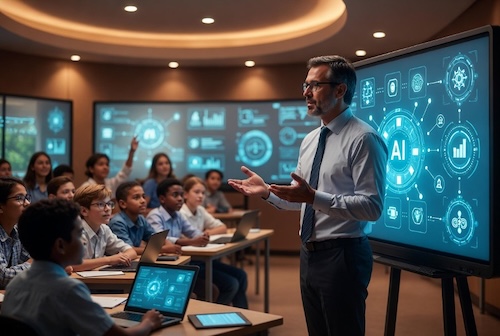
The shift reflects a fundamental change in how schools view teacher-technology relationships. Teachers no longer function primarily as information deliverers. Instead, they leverage AI systems to analyze student data, identify learning gaps, and customize instruction for individual learners. This model preserves the human elements of teaching—mentorship, social-emotional support, critical thinking development—while automating routine administrative tasks that consume planning time.
Schools implementing AI-backed learning platforms report teachers spend less time grading and more time designing instruction. Adaptive software adjusts difficulty in real time, reducing the cognitive load of differentiation for classrooms with 25 to 30 students at vastly different levels. Teachers use freed-up capacity to provide one-on-one feedback, facilitate collaborative projects, and coach students through complex problem-solving.
The transition requires deliberate professional development. Teachers need training in how AI tools function, how to interpret algorithmic outputs, and how to maintain human judgment over automated decisions. Districts investing in comprehensive professional learning report higher adoption rates and more sophisticated use than those offering minimal training.
Skepticism remains warranted on several fronts. AI systems reflect biases in training data, potentially disadvantaging students from underrepresented groups. Privacy concerns surface when companies collect granular learning data on minors. Implementation gaps widen between well-resourced districts and underfunded schools, risking deepened inequity.
The framing of this moment matters. Teachers aren't being replaced by machines. Instead, pedagogical practice evolves. The educator who masters AI tools while maintaining strong classroom relationships, content expertise, and ethical judgment becomes vastly more effective than either the traditional