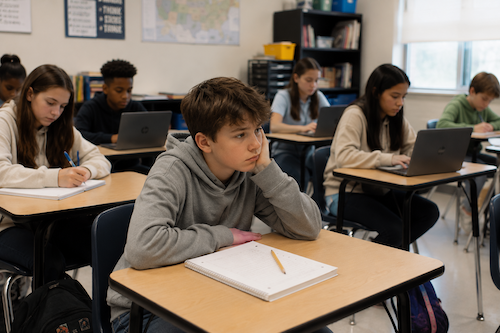
Student disengagement is reaching a breaking point in American classrooms, and educators increasingly recognize that the problem lies not in student behavior but in how learning experiences are designed.
Teachers report that students are harder to reach than in previous years, creating a classroom environment where traditional instruction fails to capture attention or drive learning. The issue extends beyond simple inattention or discipline problems. Students tune out when classroom experiences feel disconnected from their lives, when instruction relies too heavily on passive consumption, or when they lack agency in their own learning.
Research on student engagement points to specific design flaws. Lectures that dominate classroom time, worksheets that prioritize busywork over meaningful practice, and assessment methods that focus narrowly on test scores all contribute to disengagement. When students cannot see the relevance of content or have no voice in how they learn, motivation collapses.
Schools addressing this challenge are restructuring classrooms around student-centered approaches. Project-based learning, where students tackle real-world problems, increases engagement by creating clear purpose. Collaborative work allows students to build relationships with peers and teachers, which research shows strengthens commitment to learning. Teachers who offer choice, whether in assignment topics or learning methods, report higher participation rates.
Technology plays a supporting role but not a solution by itself. Digital tools amplify engagement only when integrated into thoughtfully designed lessons. A worksheet on a tablet remains a worksheet.
The shift requires teacher training and time. Educators need support to redesign curriculum, develop new assessment methods, and establish classroom norms that foster active participation. Schools that have invested in professional development see measurable improvements in attendance, behavior referrals, and academic performance.
Student disengagement reflects a mismatch between how schools operate and how young people actually learn. Fixing this requires fundamentally rethinking classroom structures, not simply asking students to try harder.