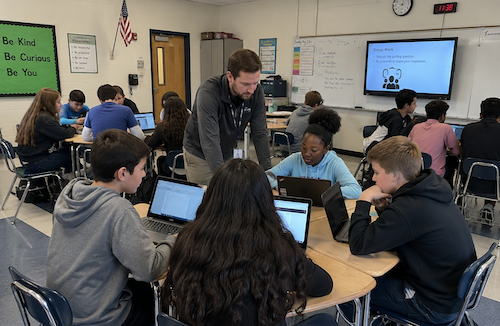
# How AI Helps Teachers Spend Less Time on Assessments and More Time on Impactful Instruction
Artificial intelligence tools are reducing the time teachers spend grading and analyzing student assessments, freeing educators to focus on instruction and personalized support. This shift addresses a persistent pain point in teaching. Teachers report spending hours on repetitive assessment tasks that could be automated, leaving less time for planning lessons and addressing individual student needs.
AI-powered assessment platforms now handle routine grading of multiple-choice questions, short-answer responses, and basic writing assignments. Systems flag patterns in student performance and generate summaries of learning gaps. Teachers then use these insights to make faster, more targeted instructional decisions rather than manually tallying scores.
The benefit extends to feedback quality. Rather than rushing through 150 student submissions to produce generic comments, teachers receive AI-generated preliminary analysis that highlights common misconceptions. Educators then add their expertise, context, and personalized notes. The result is faster turnaround on feedback without sacrificing depth.
Schools implementing these tools report measurable time savings. Teachers using AI assessment platforms spend 30 to 40 percent less time on grading tasks each week, according to early adoption studies. That translates to roughly three to five additional hours per week for lesson planning, one-on-one conferences, and intervention work.
However, educators and administrators emphasize that AI should never replace teacher judgment or human connection. Assessment data requires interpretation. A student's low score may reflect misunderstanding, test anxiety, or unclear instructions. Only teachers combine data with classroom observation, student history, and individual learning profiles to make sound decisions.
Privacy and data security remain concerns. Schools using AI assessment tools must ensure student data remains protected and that algorithms do not introduce bias in evaluating performance. Transparency matters. Teachers need to understand how their AI systems score responses and flag concerns.
The most effective implementations position