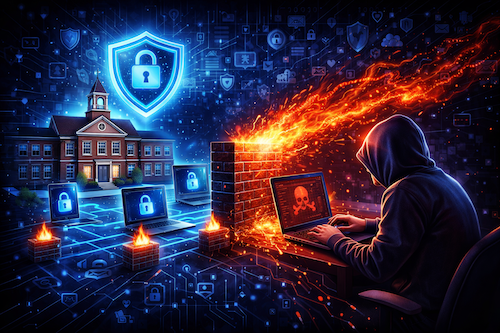
U.S. K-12 schools face mounting pressure to build digital resilience systems that can withstand cyber attacks rather than simply prevent them. District leaders learned in 2025 that cyber incidents represent an inevitability, not a possibility.
Schools operate increasingly on digital infrastructure. Student data systems, grade management platforms, attendance tracking, special education services, and remote learning capabilities all depend on functioning networks. When ransomware strikes or systems fail, schools lose access to critical student records. Teachers cannot teach. Administrators cannot manage operations. Special education services halt mid-year.
Prevention remains important. Firewalls, password protocols, and employee training all reduce vulnerability. But prevention alone proves insufficient. Hackers continuously develop new attack methods. Malware evolves. Human error persists.
Digital resilience takes a different approach. Schools must build systems that function even when attacks occur. This means redundant data backups stored offline. It means network segmentation so that one breached system cannot spread infection throughout a district. It means recovery plans tested regularly so staff know exactly what to do when systems fail.
The financial cost matters. A single ransomware attack can cost districts hundreds of thousands of dollars in recovery expenses, staff overtime, and disrupted instruction. Some districts have paid ransoms. Others have lost years of data. Schools in rural areas often lack IT staff and cybersecurity expertise, making them particularly vulnerable.
Federal support remains limited. The Cybersecurity and Infrastructure Security Agency offers resources, but K-12 schools receive far fewer federal cyber grants than healthcare systems or critical infrastructure. State funding varies dramatically. Some states require cyber insurance. Most do not.
District leaders now recognize that digital resilience requires sustained investment in IT staff, modern systems, and regular testing. Schools cannot eliminate cyber risk. They must prepare for attacks as inevitable events, plan for recovery, and maintain operations despite disruption. This shift from prevention