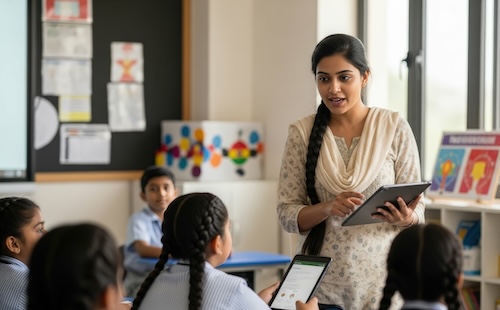
Teachers across the globe face a genuine tension when adopting artificial intelligence in classrooms. A fifth-grade educator in São Paulo articulated the concern during a professional development session last fall, asking how to leverage AI for lesson planning without simply adding screen time for students.
The question reflects a blind spot in ongoing debates about screen time in schools. Most discussions focus on whether students spend too much time on devices, but they overlook how AI can function as a planning and preparation tool for teachers rather than a direct student-facing technology.
The distinction matters. AI used by educators to design lessons, organize curriculum, create differentiated materials, and structure classroom activities operates differently than software students interact with directly. When teachers use AI to prepare better instruction, the technology amplifies teacher effectiveness without necessarily increasing student screen exposure.
Yet confusion persists. Some educators and parents conflate all technology use with screen time, assuming any AI adoption means more devices in student hands. This conflation obscures real opportunities. A teacher using AI to generate multiple versions of a lesson for students working at different levels, or to identify which students need additional support before class begins, gains teaching capacity without requiring students to spend more time looking at screens.
The São Paulo teacher's question surfaced in multiple countries where this journalist conducted professional development work, suggesting the concern transcends geography and culture. Schools everywhere grapple with balancing technology adoption against screen time concerns.
The actual challenge lies in implementation choices. Schools can deploy AI in ways that reduce teacher workload and improve instruction, or they can use it poorly, substituting AI-generated videos for real teaching. The technology itself remains neutral. How educators implement it determines whether AI becomes another screen-time problem or a tool that frees teachers to do more meaningful work.
Addressing this blind spot requires separating discussions of teacher-facing AI tools from student-facing screen time. Both conversations matter, but conflating them obscures the real question educators should