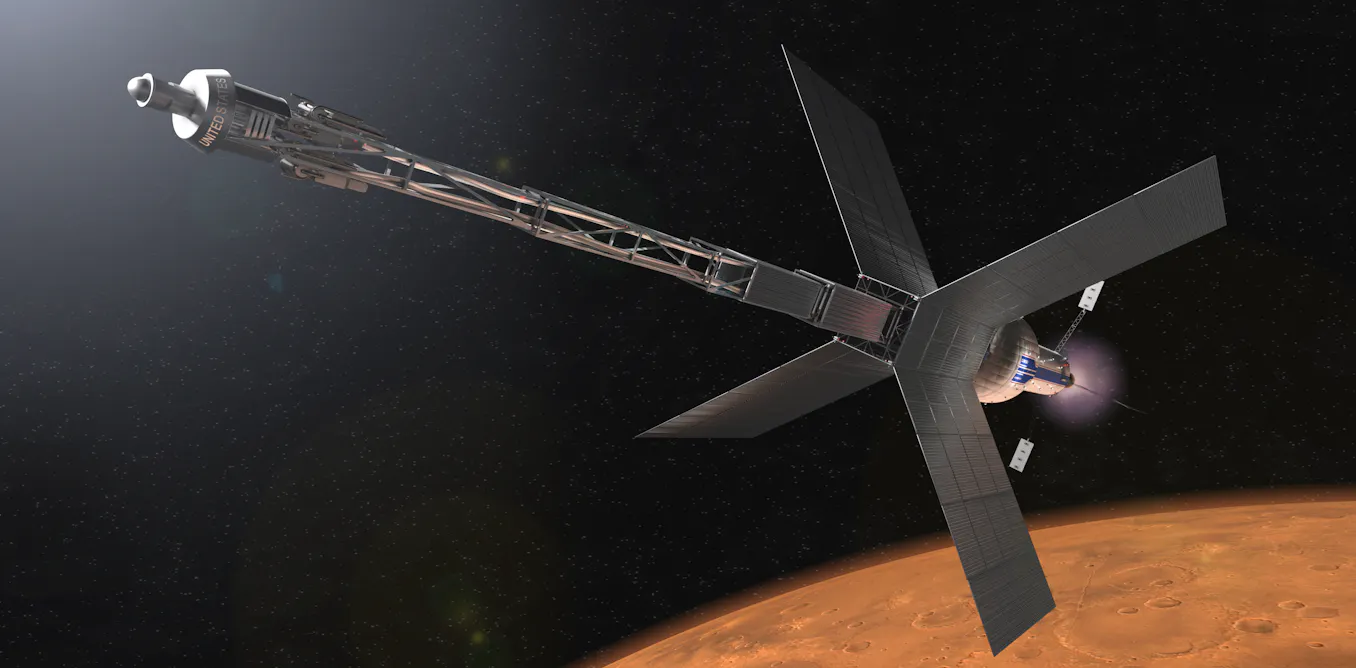
NASA is investing in nuclear thermal propulsion systems to dramatically reduce travel time to Mars, potentially cutting the journey from nine months to four months. The space agency has partnered with private contractors to develop engines that use nuclear reactors to heat propellant, generating thrust far more efficiently than conventional chemical rockets.
The Nuclear Thermal Propulsion System (NTPS) program targets launches in the mid-2030s. Nuclear engines operate at higher temperatures than chemical engines, expelling propellant at greater velocities. This efficiency translates to faster transit times, lower fuel requirements, and reduced costs for Mars missions carrying both astronauts and supplies.
Shorter journeys benefit human missions directly. Extended space travel exposes astronauts to cosmic radiation and microgravity effects that degrade muscle and bone density. A four-month trip instead of nine months cuts radiation exposure roughly in half and reduces physiological deterioration. For cargo missions, faster delivery means fresher supplies and less time for equipment degradation.
The development challenges are substantial. Nuclear reactors must operate reliably in space's harsh environment while meeting strict safety protocols for launch and operation. NASA's contractors are designing compact, lightweight reactors that generate sufficient heat without excessive weight penalties. Testing occurs primarily in simulation and ground facilities, not in space, during the development phase.
Cost considerations drive the nuclear investment. While initial development requires significant funding, nuclear engines reduce per-mission expenses over time by decreasing fuel needs and enabling more frequent launches with less mass. For sustained Mars exploration, lower operational costs support longer-term missions and larger crews.
International competition adds urgency. Russia and China have also pursued nuclear propulsion research, making American advancement a strategic priority for maintaining space leadership.
The technology remains under development, but NASA's commitment reflects confidence in nuclear thermal propulsion as essential infrastructure for Mars exploration. Success could establish nuclear engines as the standard for deep space travel, opening pathways for