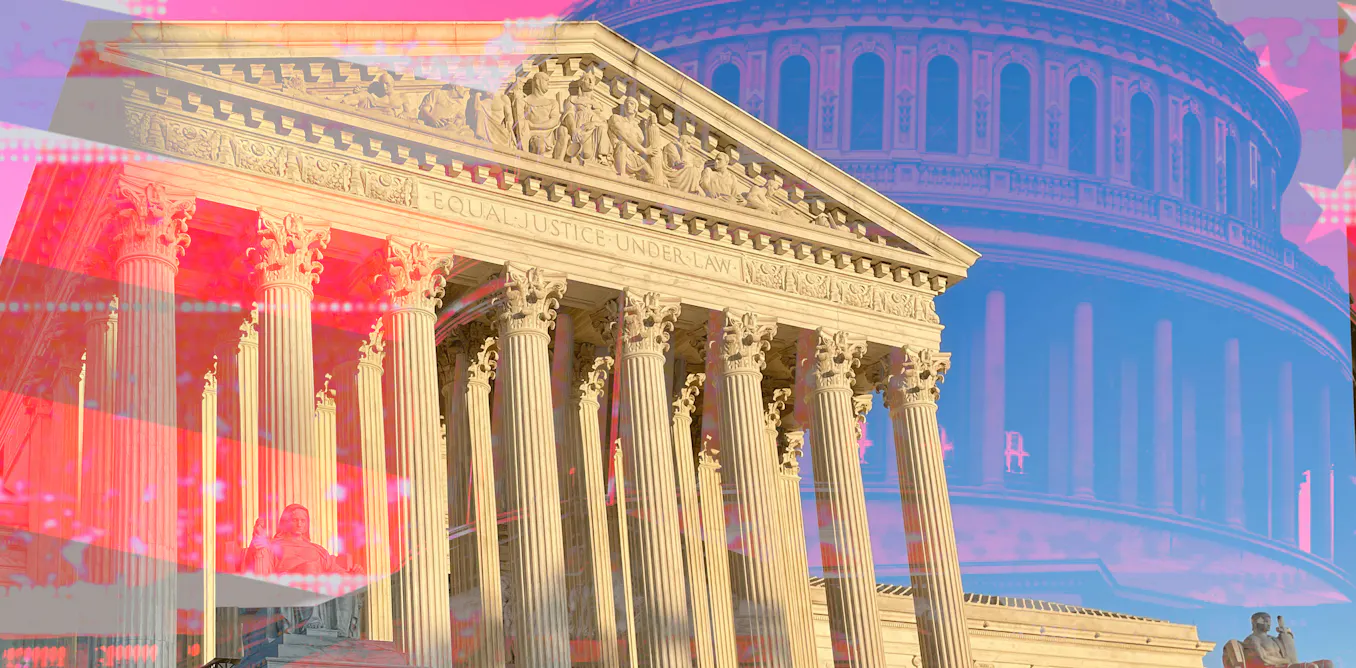
# Political Gerrymandering and Race Will Likely Remain Intertwined Despite Supreme Court Ruling
The Supreme Court's recent decision prohibits race as an explicit factor in legislative redistricting. Yet experts warn that race will persist as a hidden variable in political gerrymandering across Southern states, making the ruling harder to enforce than it appears.
The court's ban targets only explicit racial considerations. Mapmakers can achieve the same racially disparate outcomes by using proxy measures like voting patterns, residential density, and partisan affiliation. These ostensibly race-neutral tools correlate strongly with race in many regions, particularly in the South, where racial and political divides often overlap. Demonstrating that mapmakers acted with racial intent becomes extremely difficult when they cite partisan advantage rather than race directly.
Southern states have long histories of using redistricting to dilute Black voting power. The Voting Rights Act once required federal approval of maps in jurisdictions with documented discrimination. The Supreme Court gutted that requirement in Shelby County v. Holder in 2013, removing enforcement mechanisms that might have caught racial gerrymanders. Without preclearance, proving discriminatory intent in court requires evidence that competing explanations do not justify the outcomes.
Political operatives understand this loophole. They can pack Black voters into heavily Democratic districts or crack their voting strength across multiple districts, justifying these moves as partisan strategy. Courts struggle to distinguish between legitimate partisan advantage and intentional racial harm when the tools appear race-neutral on their surface.
The ruling leaves voting rights advocates with a weakened toolkit. Litigation remains expensive and time-consuming. State-level redistricting commissions could address this, but few Southern states have adopted independent oversight. Texas, Georgia, Florida, and North Carolina, among others, retain legislature-controlled redistricting processes where partisan and racial considerations intertwine.
Without explicit racial language, the