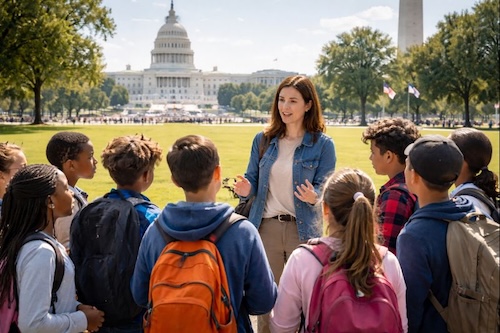
Schools have an opportunity to deepen civic engagement across all subjects as the United States approaches its 250th anniversary, according to education leaders. Rather than treating civics as a standalone class, educators can integrate civic learning into math, science, literature, and other disciplines so students develop a broader understanding of how government functions and their role in their communities.
The approach recognizes that students learn citizenship most effectively when they see it embedded throughout their education, not confined to a single course. By connecting real-world civic issues to multiple subjects, schools help young people understand that citizenship involves participation across all areas of society. A student in an English class might examine historical speeches about democracy. A science class could explore environmental policy debates. A math class might analyze voting patterns or budget allocations.
This cross-curricular strategy shifts how students view their own agency. Rather than seeing civics as abstract information to memorize, they begin to recognize themselves as potential contributors to their communities and decision-makers in their own right. Schools that adopt this model report students becoming more interested in local government, community service, and understanding policy issues that affect their neighborhoods.
The timing aligns with the nation's 250th anniversary, creating a natural moment for schools to examine democratic values and invite students to think about what American citizenship means in the current era. This approach also responds to declining civic knowledge among young people. Recent studies show that fewer teens can identify basic components of the U.S. government or understand how elections work.
Districts implementing this strategy often start with teacher training to help educators recognize opportunities for civic learning in their subject areas. Schools also partner with community organizations, local government offices, and nonprofit groups to bring real-world expertise into classrooms. Guest speakers, field trips, and student-led projects give students direct experience with civic institutions.
Schools report that integration increases both civic engagement and academic engagement more broadly. When students grasp how government budgeting connects to math or how environmental