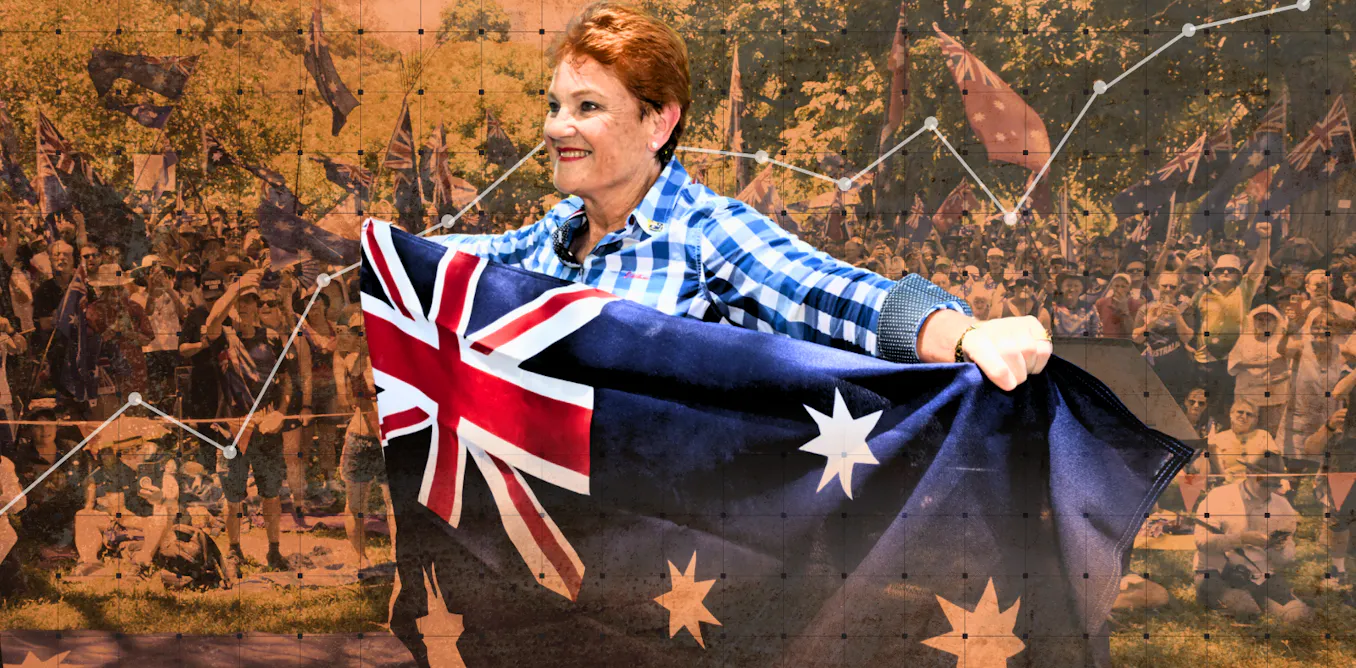
# One Nation Surges to 25-Year Polling High, Challenging Australia's Political Center
One Nation has reached polling levels unseen in two and a half decades, signaling a potential shift in Australia's political landscape. The party's resurgence raises questions about whether this represents temporary protest voting or a permanent realignment of the electorate.
Pauline Hanson's party has capitalized on voter dissatisfaction with major political parties, particularly around immigration, cost of living, and rural concerns. The surge reflects broader discontent rather than a unified ideological movement, according to polling analysts. Previous One Nation peaks occurred during specific crises or policy moments, but this sustained elevation suggests deeper structural changes in voter behavior.
The timing matters. One Nation gains ground when mainstream parties fail to address voter anxieties on issues the major parties treat as settled. Immigration policy, agricultural support, and regional investment have become focal points. The party's messaging resonates with voters who feel unheard by Labor and the Coalition alike.
However, One Nation's influence depends heavily on Hanson's leadership. At 70 years old, questions loom about succession and whether the party can maintain momentum without her. Past surges have proven temporary once the triggering issue faded or leadership changed. Building institutional capacity beyond one figurehead typically determines whether protest movements become lasting political forces.
The party's current position offers leverage without requiring electoral dominance. Even modest seat gains in key regions amplify its influence in Parliament. Minority government scenarios could give One Nation outsized power, forcing major parties to negotiate on policies they normally dismiss.
For educators and policy makers, this trend signals that curriculum debates, immigration's role in schools, and regional funding formulas remain live political issues. One Nation's positions on these matters differ sharply from Labor and Coalition orthodoxy, meaning education policy could shift depending on electoral outcomes.
The real test arrives after