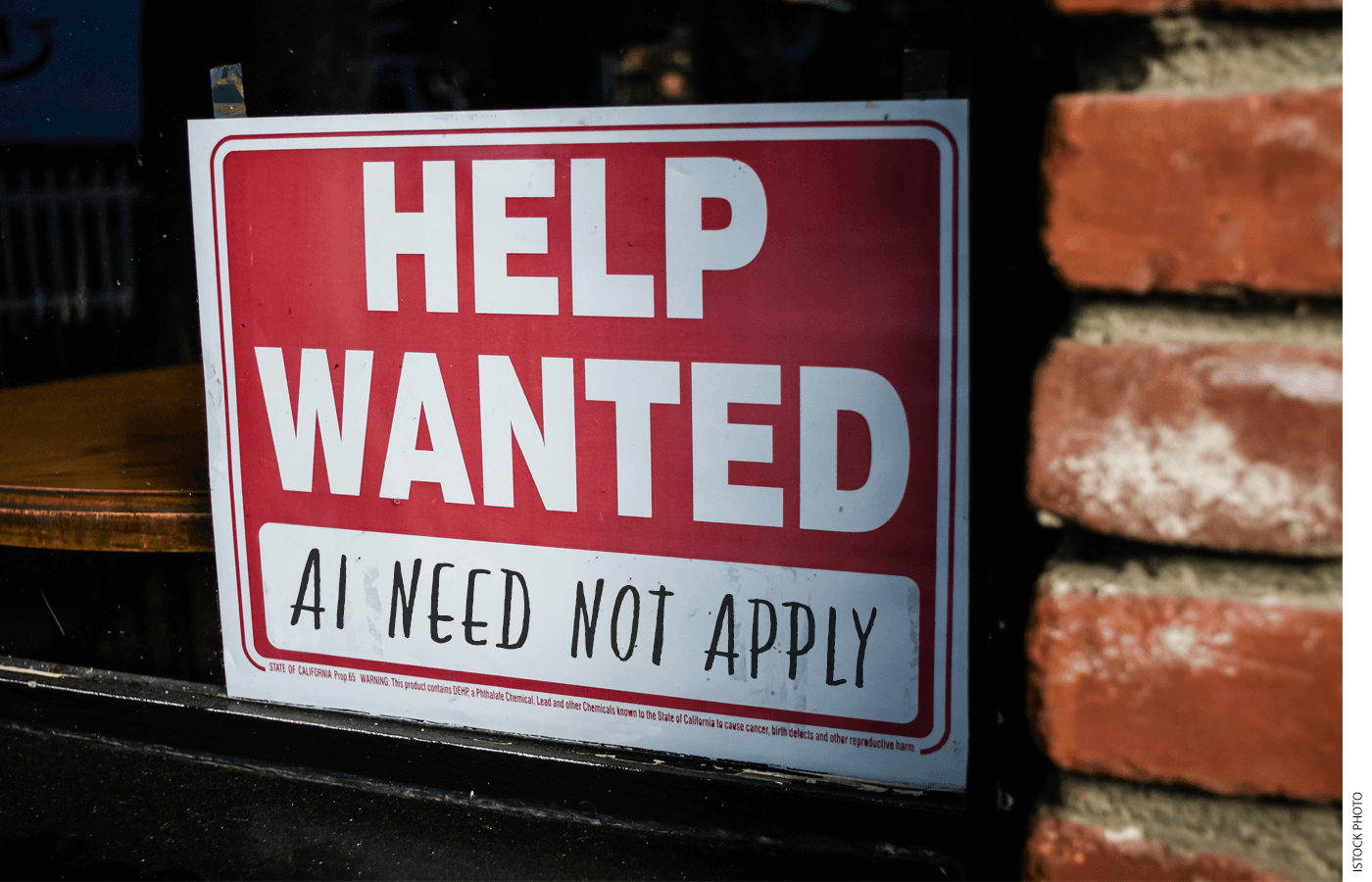
Daniel Susskind, a British economist, argues in his book "What Should My Children Do?" that artificial general intelligence (AGI) will differ from prior technological shifts by giving machines the capacity to perform a broad range of tasks and potentially displace workers across many occupations, including college-educated roles. However, evidence to date shows mixed results. AI has reduced demand for workers in customer service, data entry, and bookkeeping, while increasing demand in engineering, data science, construction, and heating and cooling. David Autor and James Manyoti note that outcomes will depend on whether AI systems enhance human skills or replace them.
Susskind cautions against predicting which skills will remain valuable, advising parents not to push children toward specific careers they expect to survive AI disruption. He argues that following interests produces happier adults. Susskind contends that some currently undervalued jobs, particularly care work, teaching, nursing, and the arts, may gain economic value under AGI because they involve human interaction that machines cannot replicate. Research by Ben Weidmann and David Deming shows that soft skills like communication and teamwork continue to prove useful as AI develops.
For preparing children, Susskind recommends developing traditional basic skills including literacy, numeracy, and critical thinking, alongside competence in using AI. He sees particular value in learning to "prompt" AI systems effectively, building appropriate questions and scaffolding before requesting answers. Students also need to identify when AI generates false information presented as fact. Susskind used AI-powered tools with his own children, including asking ChatGPT to generate code for a multiplication game and to explain evolution through storytelling.
Susskind identifies AI-driven personal tutors and computer-based simulated learning worlds like Mission US as particularly valuable for education. However, he provides limited detail on implementation. Realizing his vision across U.S. schools would require massive changes, particularly around testing for both basic skills and AI competence. Daniel Koretz notes that testing for accountability has produced dysfunctional responses in some schools despite improvements in others.