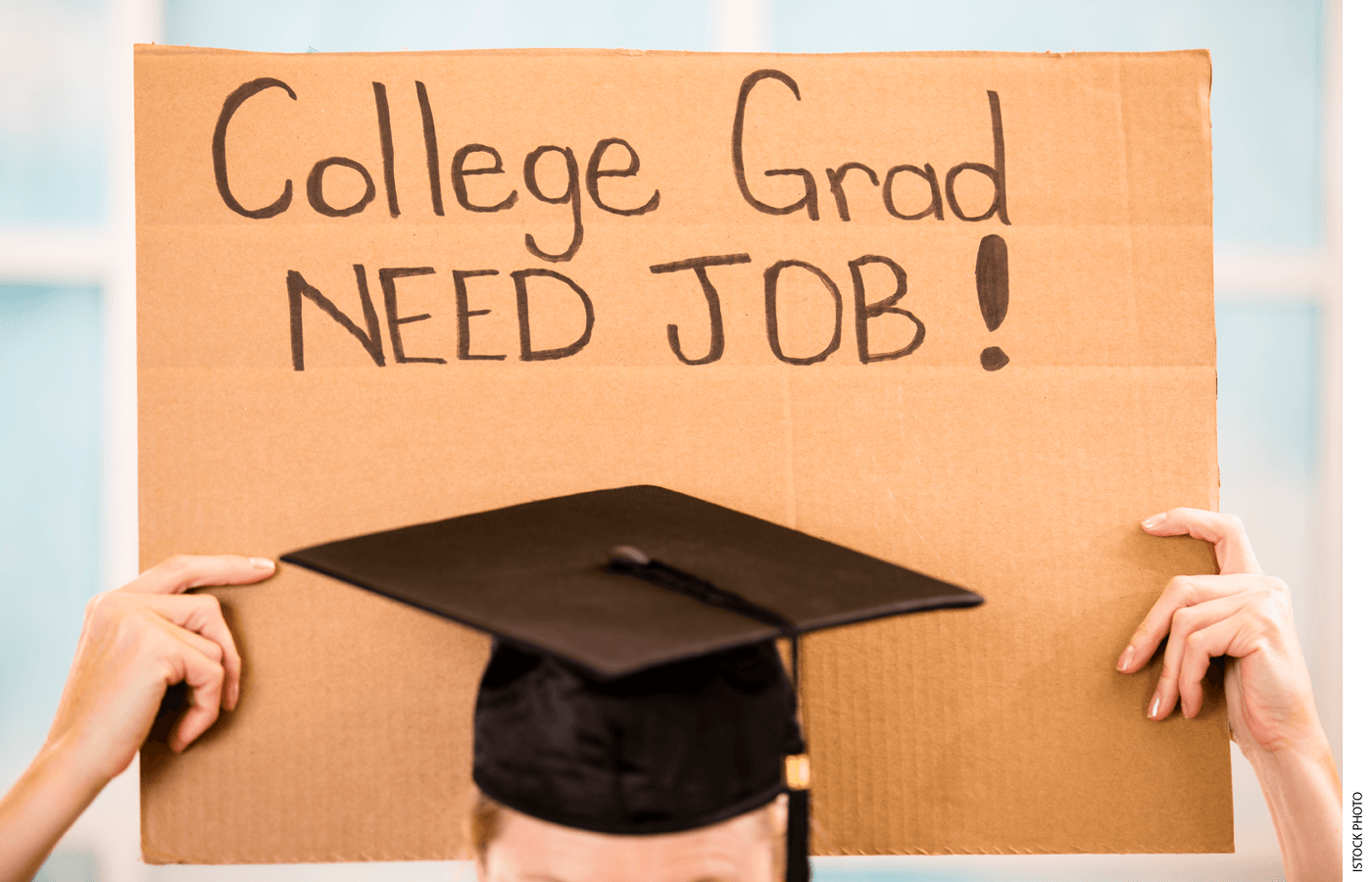
A widely cited claim that 52 percent of recent college graduates are underemployed has shaped public concern about higher education's value. The statistic, from a 2024 Strada Education Foundation and Burning Glass Institute study, has appeared in Fortune, ConsumerAffairs, and been cited by conference speakers to illustrate problems with university preparation for work.
The study's scope limits its findings significantly. It analyzes only bachelor's degree holders who stopped their education there, excluding 38 percent of all college graduates who went on to earn graduate or professional degrees. Those excluded graduates include lawyers, doctors, and MBA holders whose bachelor's degrees opened doors to their careers. The study's executive summary stated the underemployment figure without emphasizing this exclusion, and major media outlets like Bloomberg and the Wall Street Journal often overlooked or buried the limitation.
Standard underemployment statistics that include all college graduates show somewhat lower rates. The Federal Reserve Bank of New York found 42 percent underemployment for recent graduates in June 2026 and 34 percent for college graduates ages 22 to 65 in the same period.
Defining underemployment itself proves complicated. The Georgetown University Center on Education and the Workforce found in a February 2026 report that more than a quarter of occupations classified as high school level by the Bureau of Labor Statistics actually employ more 25-to-54-year-old workers with a bachelor's degree than with only a high school diploma. Among advertising sales agents, classified as high school level, 70 percent hold a bachelor's degree or higher, earning 78 percent more than colleagues with only high school diplomas.
Using more refined calculations that account for wage premiums and job diversity, the Georgetown study estimated underemployment at about 25 percent for recent graduates and 22 percent for all prime-age, full-time workers.
Matt Sigelman, president of the Burning Glass Institute, told the Chronicle of Higher Education that underemployed college graduates do receive a wage premium, though higher in jobs classified as requiring degrees. Harvard labor economist Lawrence Katz dismissed underemployment as a useful analytical tool.