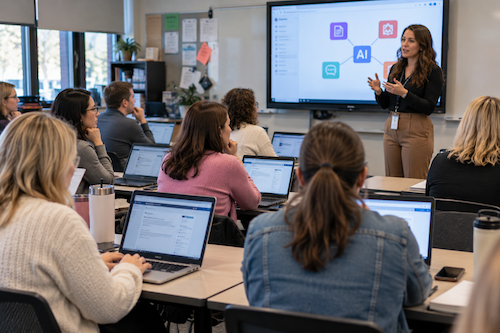
K–12 districts are rapidly rolling out AI training through workshops and resources, but one-time professional development sessions leave teachers unprepared for real classroom decisions, according to analysis based on a research-practice partnership conducted by Digital Promise with support from D2L.
The partnership examined how educators in higher education settings used instructor-facing AI. Researchers found that educators found AI support most useful when someone connected it to a specific problem they were already trying to solve. One participant delayed attending professional development but engaged immediately when an instructional designer showed how an AI capability could help create weekly course overviews. The participant called it an "I-need-it" moment.
Teachers make instructional decisions differently than higher education faculty do, but the finding suggests that relevance matters. Teachers deciding whether to use AI must consider context: whether it will strengthen student learning, whether they can trust its output, whether all students can access it, what students should work through themselves, and where their own judgment is essential. These decisions emerge while planning lessons, revising assessments and solving everyday problems that rarely fit into a professional development session.
Districts need sustained support beyond workshops. Teachers benefit from access to trusted colleagues who understand instructional context and can help them think through where AI fits into lessons and assessments as decisions arise. Many districts already have instructional coaches, curriculum specialists, technology integrationists and teacher leaders. Smaller and rural districts may rely on regional service agencies.
Developing good instructional judgment around AI requires continued practice. Teachers need opportunities to try what they learned, inspect results and reconsider choices as technology and their understanding evolve. A strategy appropriate for a ninth-grade history assignment may not work in a third-grade classroom. An appropriate use during lesson planning may raise different considerations when students use the same capability themselves.
District leaders should involve instructional coaches and teacher leaders in AI governance and tool evaluation so they understand the reasoning behind decisions. They could provide protected time for experimentation and make help available when teachers plan curriculum, design assessments or examine student work. Districts should also measure whether educators can evaluate AI critically and explain their reasoning, not simply count how much AI gets used.
Instructional coaches and teacher leaders supporting colleagues need their own time to experiment, opportunities to work with peers and access to district leaders who can answer questions about policy, curriculum, technology and student needs. They should have enough authority to raise concerns when a tool does not serve an instructional purpose.