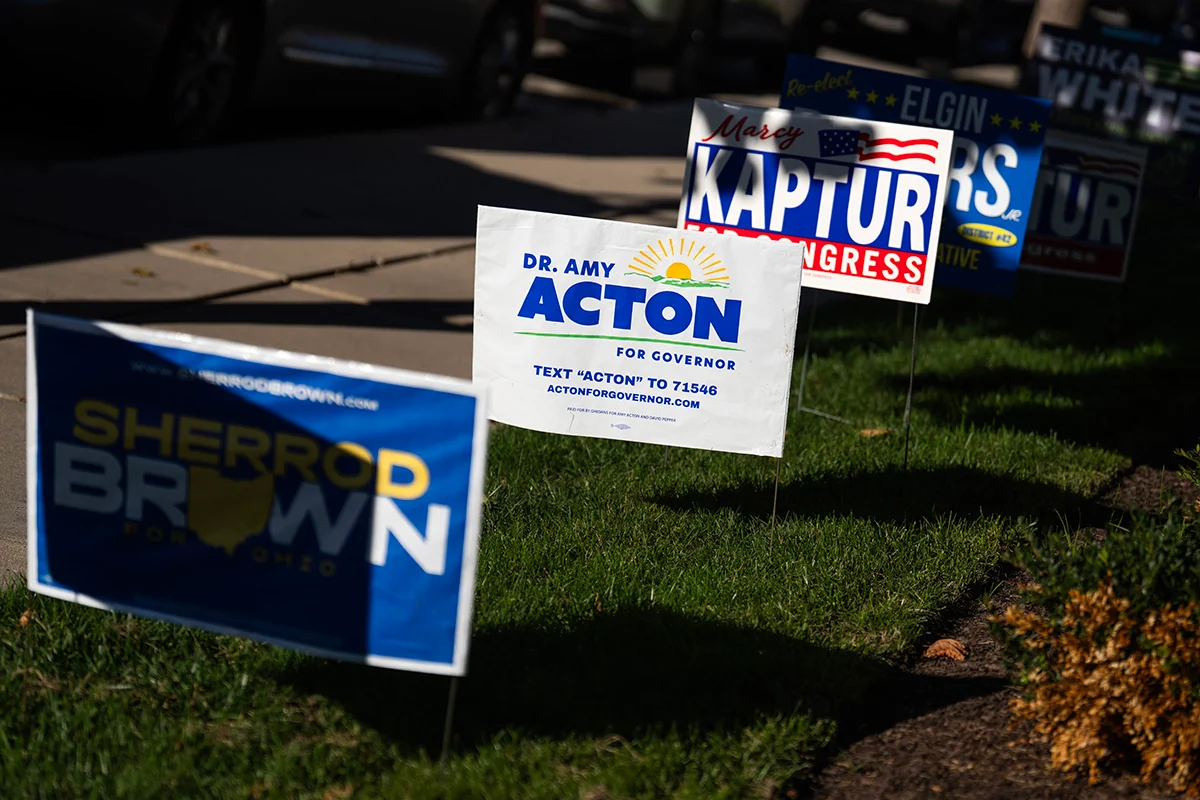
Democrats could gain control of one or both chambers of Congress in Tuesday's midterm elections, a shift that would reshape federal higher education policy. If successful, they plan to oversee the Trump administration's use of federal grant funding, its treatment of international students, and its outsourcing of Department of Education programs to other agencies, according to Emmanual Guillory, assistant vice president for government relations at the American Council on Education.
Democrats also intend to try to undo student loan limits in Republicans' One Big Beautiful Bill Act and increase the minimum Pell Grant for low-income students, Guillory said. However, he noted that "we still have a Republican president, and he still has the power to veto, and so a lot of these initiatives will likely not become law" unless paired with something Republicans want.
State elections carry direct weight for higher education funding. Tom Harnisch, vice president for government relations at the State Higher Education Executive Officers Association, said that "control of Congress will matter for higher education funding, student aid, research and oversight of the administration." But he added that "divided government will make sweeping higher education policy legislation much harder to advance."
At the state level, pre-student appropriations for public higher education operating expenses decreased 1 percent in fiscal year 2025 after a dozen years of increases. Several public institutions have announced mass layoffs and program cuts. Party control of governors' offices and legislative chambers will determine budget setting, vetoes, and university governing board appointments. Harnisch noted that 39 states currently have a trifecta, where one party holds the governorship and both chambers, allowing higher education policy to move quickly from introduction to enactment.
Several states have higher education ballot measures this year. Arizona's Proposition 142 would amend the state constitution to ban diversity statements and other policies at public universities. California's Proposition 38 would authorize the state to borrow $8.4 billion for immunology research, with half going to a single University of California-affiliated nonprofit medical research institute and half supporting research grants. Repaying the debt would cost California $500 million to $600 million annually for about 20 years.
The American Association of University Professors endorsed a dozen Democratic congressional candidates for the first time in its history. Todd Wolfson, president of the AAUP, said the organization's "central goal" is "trying to win free public higher education."