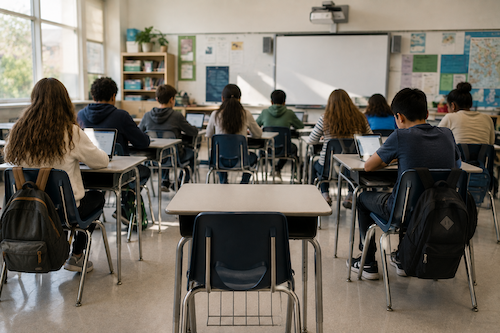
# Student Attendance Crisis Reveals Deeper Problem: Schools Must Build Connection to Keep Kids Engaged
Chronic absenteeism has become one of the most pressing challenges facing American schools. The metric tracks students who miss 10 percent or more of school days in a year, and rates have climbed sharply since the pandemic disrupted normal school operations.
The problem runs deeper than simple truancy. While attendance rates provide the scoreboard for measuring school performance, connection represents the actual game being played. Students who feel isolated, unsupported, or disconnected from their peers and teachers skip school at significantly higher rates than those who experience genuine belonging at school.
Schools alone cannot solve this problem. The infrastructure required to monitor attendance, identify at-risk students, and intervene effectively involves multiple stakeholders operating beyond traditional school walls. Districts need support from families, community organizations, local employers, and social service agencies to address root causes of absenteeism.
The data tells a stark story. Students missing more than 10 percent of school days fall behind academically at predictable rates. Chronic absenteeism in elementary school correlates directly with lower graduation rates in high school. The pattern intensifies during secondary education, where absenteeism spikes dramatically among students experiencing depression, anxiety, or social isolation.
Teachers and counselors report that students who stay engaged at school typically cite specific relationships as the reason. They mention a coach who believed in them, a teacher who remembered their name, or a peer group that made them feel valued. These connections cannot be mandated. They emerge from consistent interaction, genuine interest, and an environment where students feel seen.
The pandemic accelerated disconnection. Remote learning eliminated many informal interactions that build belonging. When schools reopened, many students struggled to re-establish routines and relationships. Some never returned to consistent attendance patterns.
Districts implementing successful attendance interventions focus first on connection rather than punishment. Schools that reduced chronic absenteeism invested in mentorship programs, peer support groups, and increased communication between home and school. Some partnered with community organizations to address transportation barriers, food insecurity, and mental health needs that underlie many absences.
The challenge requires schools to operate differently. Rather than viewing attendance as an enforcement issue, successful districts frame it as a relationship problem. This shift demands training for staff, reallocation of resources, and willingness to collaborate with partners outside education.
Parents and community members also bear responsibility. When adults in a student's life communicate that school matters and show interest in daily experiences there, attendance improves. Conversely, families facing housing instability, work schedule conflicts, or their own health crises struggle to maintain consistent school routines regardless of school efforts.
Moving forward, districts must measure what matters most. While attendance percentages appear in reports and accountability systems, the actual indicator of school health remains whether students experience connection. Schools that build strong relationships see attendance improve naturally. Those that focus only on the numbers without addressing underlying disconnection find themselves running in place.
The scoreboard shows attendance. The game itself is connection.