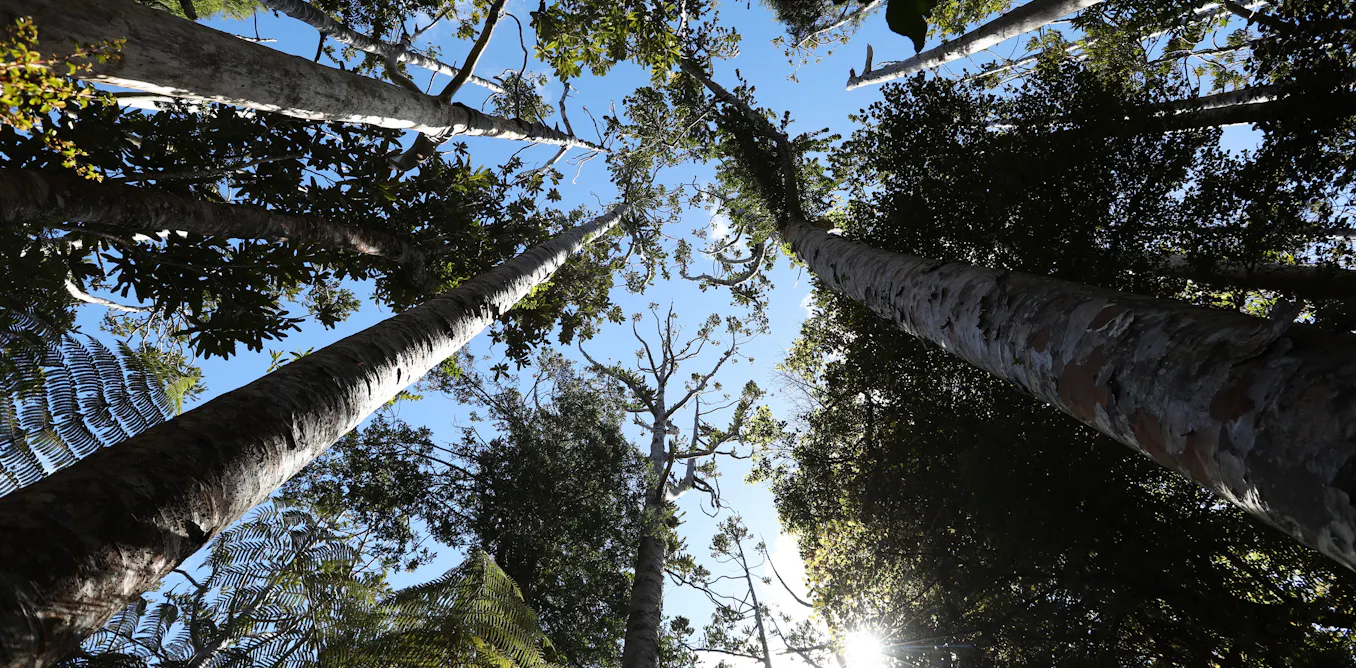
# Kauri Dieback Threatens Forest Carbon Storage
Forests affected by severe kauri dieback shift from accumulating carbon to losing it, according to new research. The disease particularly impacts mature trees, which play a significant role in carbon storage.
Kauri trees, native to New Zealand, are large conifers that typically accumulate carbon as they grow. When dieback disease affects forests, the loss of mature kauri trees alters the forest's carbon dynamics. Affected forests can reverse from net carbon sinks, where they absorb more carbon than they release, to net carbon sources that emit carbon into the atmosphere.
The research, reported through The Conversation, examines how widespread kauri dieback changes forest functionality at a carbon level. Mature kauri trees represent substantial carbon storage capacity. As these trees die from the disease, forests lose both their immediate carbon-absorbing function and their long-term storage potential.
This finding carries implications for New Zealand's broader climate and forestry strategies. Forests serve as carbon sinks in climate mitigation efforts, and the loss of that function in kauri-affected areas represents a measurable environmental shift.
The disease poses a dual threat: it removes ecologically important native trees while simultaneously compromising the carbon-storage services these forests provide. The research highlights an underexplored connection between forest health and climate function, showing that disease management becomes relevant not just for biodiversity and timber, but for carbon cycle outcomes.
Understanding how kauri dieback affects carbon dynamics helps inform forest management and conservation priorities in affected regions.