# 35 Top Learning Apps Transform How Students Learn in 2024
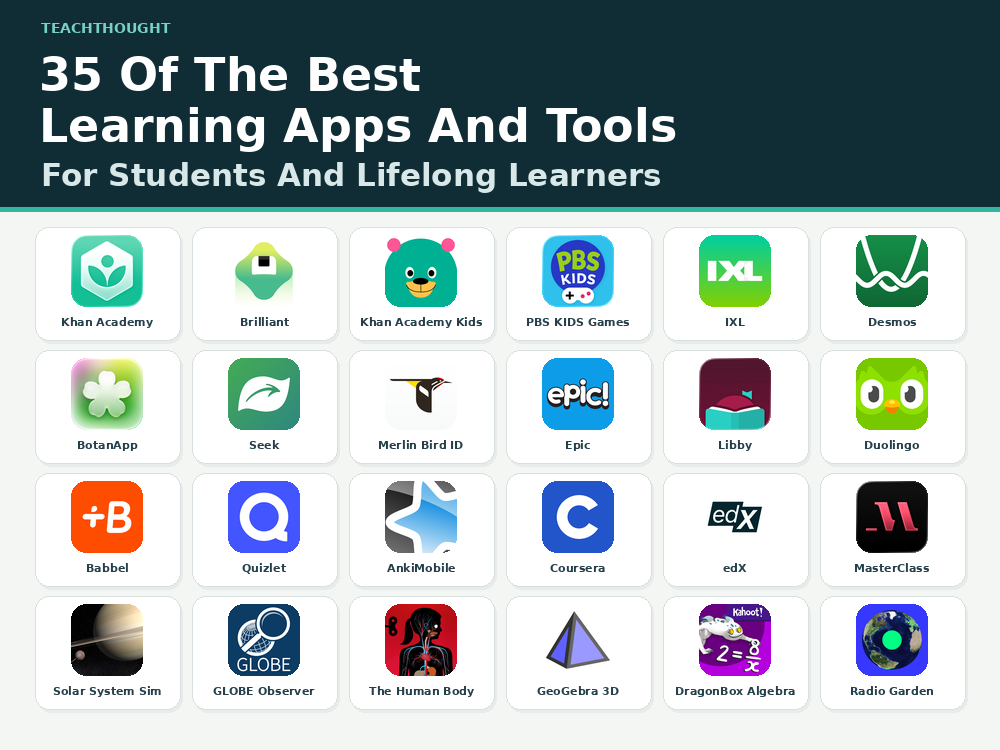
Educational technology companies have built a robust ecosystem of learning apps designed to support students across grade levels and subject areas. Brilliant, IXL, Seesaw, Khan Academy, FlipGrid, and Marco Polo represent some of the most widely adopted platforms reshaping classroom and home-based learning.
These apps serve distinct purposes within the broader edtech landscape. Khan Academy, a free platform founded by Sal Khan in 2008, delivers video lessons and practice exercises across math, science, and humanities. The nonprofit has reached millions of learners globally and remains one of the most trusted resources for supplemental instruction and test preparation.
IXL Learning offers adaptive practice programs aligned to state standards. Teachers and parents use IXL for personalized skill development in mathematics and language arts. The platform adjusts difficulty based on student performance, creating customized learning paths rather than one-size-fits-all instruction.
Seesaw functions as a digital portfolio and classroom communication tool. Teachers use it to capture student work, share progress with families, and facilitate peer feedback. The platform emphasizes student voice and ownership of learning, allowing young learners to reflect on their own growth.
FlipGrid enables asynchronous video discussion. Students record short video responses to teacher prompts, creating engagement opportunities for remote or hybrid classrooms. The platform addresses equity concerns by allowing participation without live attendance requirements.
Marco Polo operates as a private video messaging app designed for educators and small groups. Unlike public social media, it offers secure communication between teachers and students or among peer learning groups.
Brilliant focuses on interactive problem-solving in STEM subjects. The platform teaches computer science, mathematics, and physics through hands-on exploration rather than passive video consumption.
The 35-app compilation reflects several trends shaping K-12 and tutoring markets. Schools increasingly adopt blended learning models that combine in-person instruction with digital tools. Parents seeking enrichment or academic support turn to apps when hiring private tutors becomes cost-prohibitive. Many districts now bundle multiple platforms into comprehensive learning stacks.
Adoption patterns vary by region, school type, and student age. Elementary schools favor portfolio and communication tools like Seesaw. Middle and high schools lean toward content-delivery platforms like Khan Academy and IXL. Homeschooling families often cobble together multiple apps to build custom curricula.
Evidence on learning outcomes remains mixed. Research published in the Journal of Educational Technology and Society shows that adaptive platforms like IXL correlate with modest gains in standardized test scores, particularly for students with learning gaps. However, app effectiveness depends heavily on implementation quality, teacher training, and consistent student engagement.
Cost shapes adoption decisions. Khan Academy's free model removes financial barriers for families and schools. IXL operates on subscription pricing that ranges from $120 to $300 annually per student. Schools juggle platform costs against limited technology budgets.
Parents and educators selecting apps should evaluate alignment with learning goals, ease of use, data privacy practices, and evidence of effectiveness. The best-fit tool depends on whether the goal involves skill practice, content delivery, assessment, or social-emotional learning.