# 12 Tips For Students To Manage Their Digital Footprints
Digital footprints follow students everywhere. Every social media post, every search, every photo upload creates a permanent record that colleges, employers, and strangers can access. Teaching students to manage this reality requires a two-step approach: first understanding vulnerability, then building practical defenses.
The stakes are real. A 2023 Pew Research study found that 64% of teens have experienced some form of online harassment. College admissions officers routinely review applicants' social media accounts. Employers screen digital histories before hiring. Universities report that social media posts have led to scholarship revocations and expulsion proceedings. Students often don't realize that deleting a post doesn't erase it from screenshots, archives, or cached versions across the internet.
TeachThought's framework emphasizes starting with awareness. Students need to understand that their digital footprint begins before they post intentionally. Search engines track browsing behavior. Apps collect location data. Advertising networks build profiles from clicks and likes. Facial recognition technology identifies people in photos they didn't upload themselves. Until students grasp this ecosystem, they cannot protect themselves.
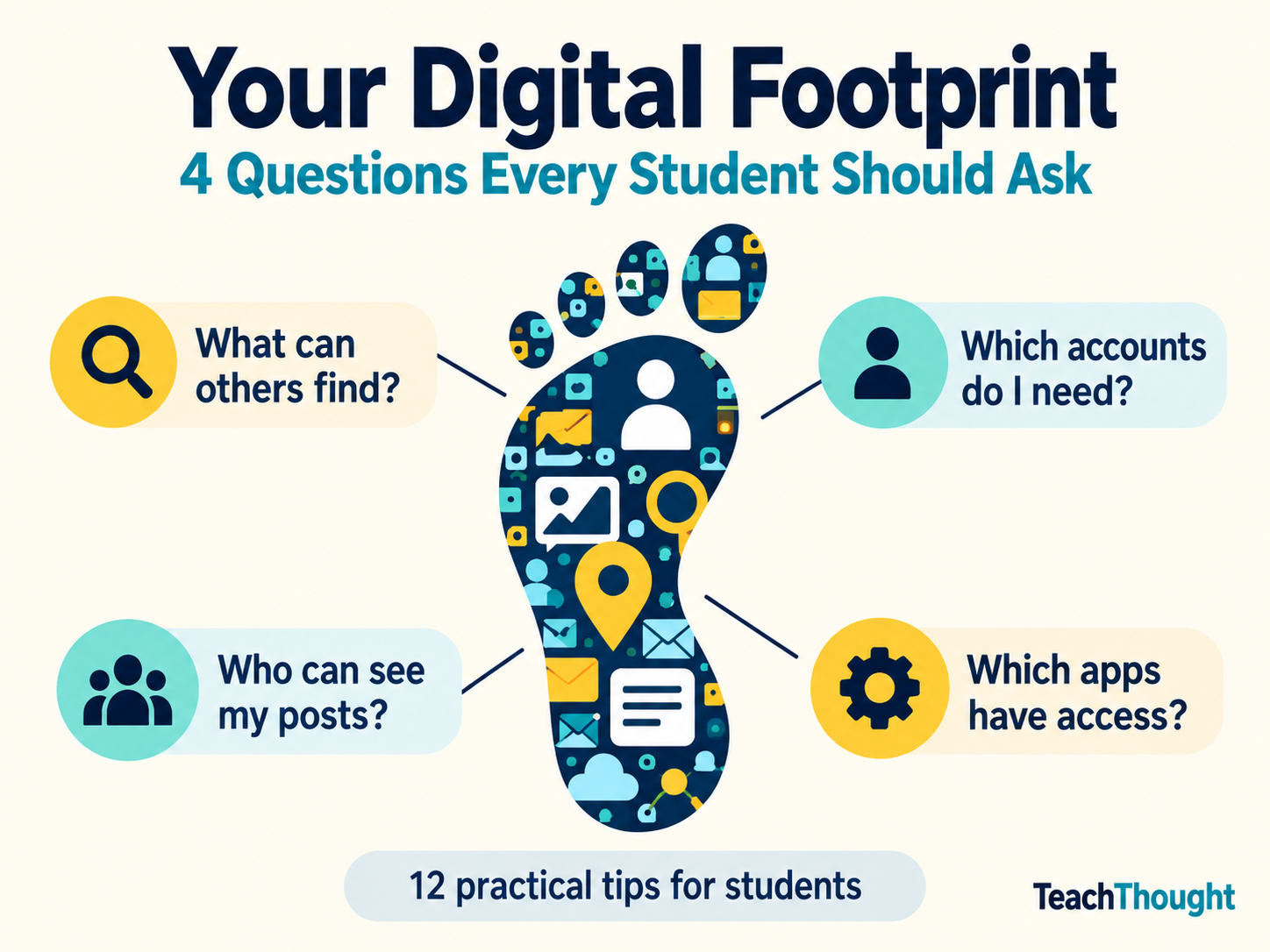
Once awareness takes hold, schools should teach concrete strategies. These include regularly auditing privacy settings across all platforms, understanding that "public" posts remain public permanently, and recognizing that even private messages can be forwarded. Students should know how to search their own names on Google to see what appears publicly. They should learn that photos posted by friends can tag and identify them without permission. Location data embedded in photos can reveal home addresses. Metadata on videos discloses timestamps and device information.
The practical tips educators recommend include using strong, unique passwords for each account; enabling two-factor authentication; reviewing tagged photos before they appear on profiles; being selective about friend requests; thinking before posting anything you wouldn't want on a job application; and understanding that tone doesn't translate in text, so jokes can be misinterpreted.
Schools also need to address the gap between what students think is private and what actually is. Many teens believe private Instagram accounts offer complete protection. They don't. Screenshots bypass privacy. Recovered accounts expose old posts. Hacked credentials leak personal information. Students also need to understand how data brokers work. Companies like Spokeo and PeopleFinder aggregate publicly available information and sell access.
The responsibility doesn't fall entirely on students. Schools should integrate digital literacy into curriculum starting in middle school, not just as a one-time assembly. Teachers can build lessons around real scenarios: what happens if a college sees a problematic post, how to respond to cyberbullying, what to do if personal data appears on data broker sites. Parents need the same education so they understand what their children face online.
This approach shifts digital footprint management from shame-based (don't post bad things) to empowerment-based (understand the system and use it strategically). Students who learn to manage their digital presence develop skills that protect their privacy, reputation, and future opportunities. Schools that teach these skills give students control over a digital record that will follow them for decades.