# When Cartoons Meet Reality: The Long History Behind "Coyote vs. Acme"
The release of "Coyote vs. Acme" marks another chapter in a filmmaking tradition that stretches back a century. Mixed media cinema, which blends animated characters with live-action footage, has existed since the birth of animation itself.
The earliest experiments in this hybrid format emerged in the 1920s, shortly after animation became a viable art form. Studios quickly discovered that placing drawn characters into real-world settings created novelty and visual appeal for audiences. This technique required animators to match perspectives, lighting, and movement carefully. The technical demands were substantial, yet filmmakers pursued the approach because audiences responded to the uncanny space between the animated and the real.
Throughout the 1940s and 1950s, major studios refined the process. Walt Disney's "Song of the South" (1946) and Mary Poppins (1964) became cultural touchstones, demonstrating that mixing media could generate enormous box office returns and critical attention. These films showcased how effectively animated sequences could enhance storytelling when integrated with live-action narratives. The technical achievement itself became part of the entertainment value.
The gap between animation and live-action narrowed considerably with digital technology. Computer-generated imagery eliminated some of the labor-intensive rotoscoping and frame-by-frame compositing that earlier animators endured. Films like "Who Framed Roger Rabbit" (1988) proved that hybrid cinema could work at scale for contemporary audiences. Modern audiences grew accustomed to seeing cartoons interact with real actors and environments, making the format feel natural rather than jarring.
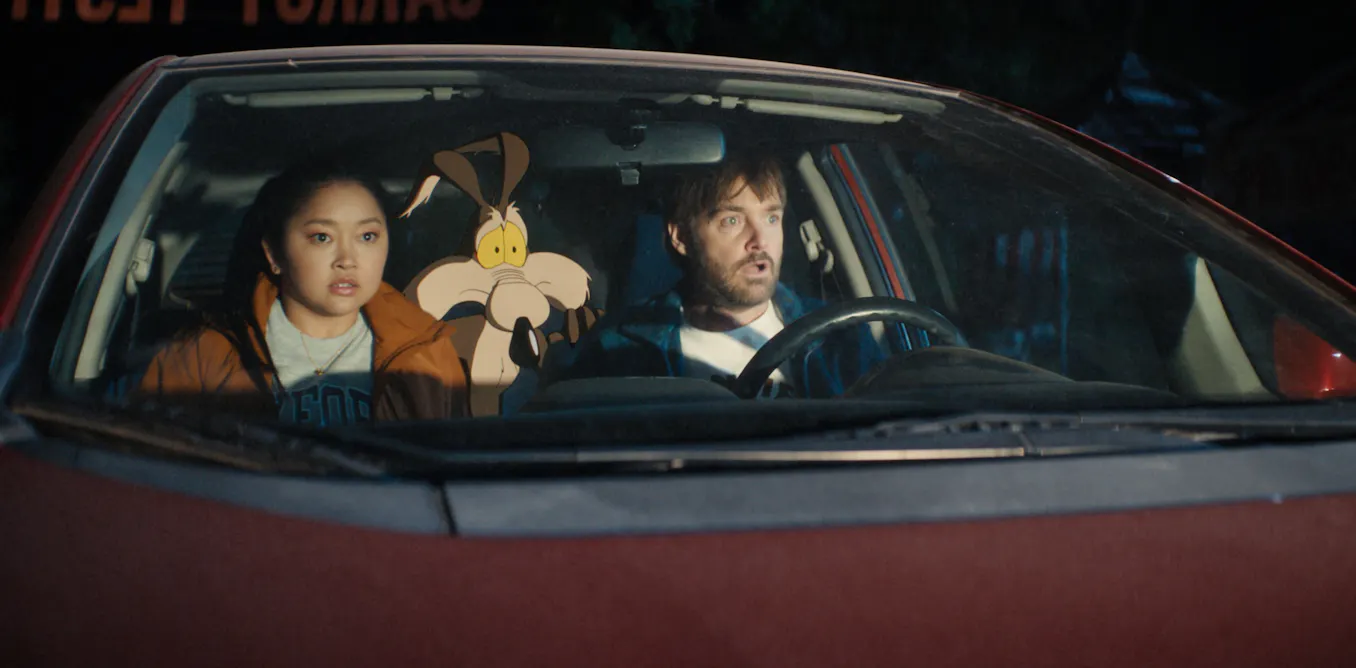
"Coyote vs. Acme" takes the classic Looney Tunes dynamic and plants it squarely in a tangible world where the Road Runner and Wile E. Coyote navigate actual landscapes and buildings. The premise itself is rooted in the character's history across television and film. By placing these iconic cartoon figures into live-action surroundings, the film follows a playbook that studios have perfected over generations.
This format remains commercially viable because it satisfies multiple audience segments simultaneously. Children recognize the cartoon characters from streaming and television. Adults recall the original Warner Bros. cartoons from their own childhoods. The novelty of seeing beloved animated figures in realistic settings bridges generational gaps.
The technical execution matters more now than ever. Modern audiences expect seamless integration. Poor compositing or mismatched physics pulls viewers out of the experience immediately. Successful mixed-media films maintain internal consistency, ensuring that animated characters behave according to the rules established by their live-action environment.
"Coyote vs. Acme" enters a proven tradition, yet each new entry carries risk. The format works only when the story justifies the technical complexity. When filmmakers use mixed media as a gimmick rather than a storytelling tool, audiences recognize the emptiness. When the premise and execution align thoughtfully, the format delivers something audiences cannot experience in purely animated or purely live-action films.
The 100-year lineage demonstrates that this hybrid approach addresses something fundamental about cinema: the desire to bring fantasy into recognizable spaces and ask audiences to accept both simultaneously. That tension between the impossible and the real remains the heart of the format's enduring appeal.