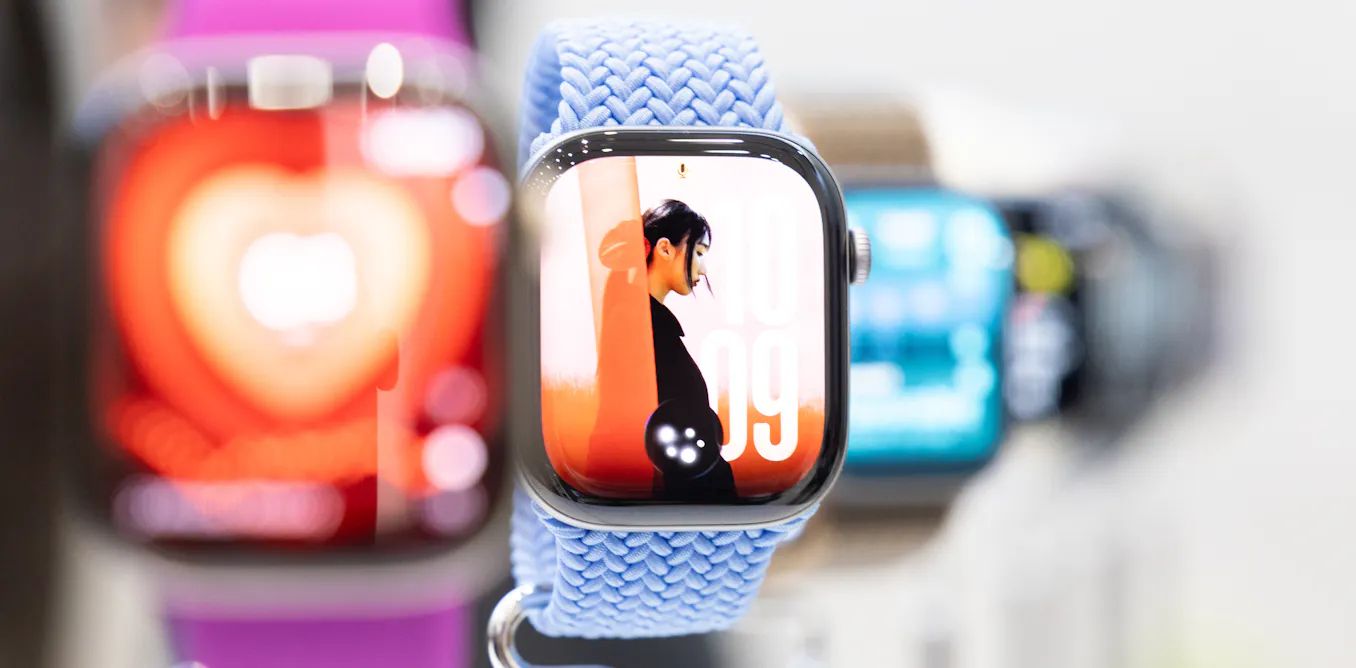
# Apple's New Watches Embed Always-On Recording Into Daily Life
Apple's latest smartwatch models include continuous audio recording capabilities that the company frames as privacy-protective, but the technology represents a broader shift toward normalizing ambient surveillance in consumer devices.
The watches use on-device processing to capture audio constantly, then filter recordings locally before any data leaves the device. Apple argues this architecture protects privacy because the raw audio never reaches company servers. Instead, the watch performs voice recognition and command detection on the hardware itself, deleting most recordings immediately.
This technical approach matters because it establishes a new standard: always-listening devices become acceptable if companies promise local processing handles sensitive data. The distinction between "recording" and "processing locally" may feel meaningful to engineers, but consumers see devices that never stop listening.
The practical implications extend beyond Apple. When a major technology manufacturer normalizes constant recording, competitors face pressure to match the capability. Google, Amazon, and Samsung already build always-on voice assistants into their devices. Apple's move signals that the barrier between opt-in voice commands and ambient audio capture is dissolving.
Privacy advocates raise legitimate concerns about the assumption underlying this technology. Local processing does reduce some risks, but it doesn't eliminate them. Bugs in voice recognition software can cause unintended recordings. Security vulnerabilities could allow attackers to access audio streams. Firmware updates might change what data gets retained. Users cannot independently verify that recordings actually stay local or that deleted audio genuinely vanishes.
The watches also highlight a consumer behavior problem. Most users won't examine technical architecture or privacy documentation. They know the device listens constantly. Over time, that becomes unremarkable. The watches train users to accept surveillance as a normal feature of wearable technology.
The legal landscape enables this shift. The Children's Online Privacy Protection Act and similar regulations focus on data collection practices, not the act of recording itself. If Apple genuinely deletes audio locally and doesn't transmit identifiable recordings to servers, the watches may comply with existing law even though they record continuously.
Educational institutions and workplaces increasingly deploy similar technologies. Schools use voice-activated learning devices. Offices install smart assistants. Each application extends the expectation that ambient recording is standard.
The long-term risk involves what technologists call "function creep." A feature designed for voice commands could later be repurposed for activity monitoring, emotional state detection, or other applications users never anticipated. Once the recording infrastructure exists, pressure mounts to extract additional value from continuous audio data.
For parents and educators, the watches present concrete questions. Are students comfortable with devices that listen constantly, even in home or classroom settings? Does normalizing surveillance in childhood affect attitudes toward privacy later? Do young users understand what "local processing" means or why it matters?
Apple's marketing emphasizes user control and device intelligence. The company positions these watches as liberation from phones, not surveillance tools. That framing works because the technology feels invisible and the immediate benefits seem clear. But the choice to listen constantly, regardless of processing location, fundamentally alters the relationship between users and their devices.
The watches represent a fork in how consumer technology develops. One path leads toward always-on devices that users learn to trust because companies manage privacy carefully. The other path treats ambient recording as normal infrastructure, opening doors to future uses nobody anticipated. Apple's latest models walk directly down that second path.