# Before You Click Submit: Why AI Users Need To Pause
The speed of artificial intelligence poses a real problem for students, educators, and professionals who rely on it. AI systems produce polished, grammatically correct text in seconds. That velocity creates psychological pressure to move forward without reflection. New research and practitioner experience suggest this impulse works against quality and accuracy.
The core issue sits in what researchers call the "fluency heuristic." When output looks finished, our brains treat it as finished. AI text rarely contains obvious errors that trigger skepticism. It reads like it came from a competent human. This appearance of polish masks real problems: factual errors, logical gaps, missed context, tone mismatches, or outputs that fail to address the actual assignment or task.
Students face particular risk. A high school student who generates an essay outline in ChatGPT and submits it without verification may include fabricated sources or misrepresented data. The AI output looked authoritative. The student moved fast. Neither the student nor the teacher caught the problem until after submission. Similar scenarios play out in college courses, professional contexts, and workplace training environments.
The stakes extend beyond individual assignments. When educators use AI to draft rubrics, assessment feedback, or lesson plans without critical review, students receive lower-quality instruction. When professionals deploy AI-written emails or reports without checking facts, they damage credibility and make decisions based on flawed information. When organizations adopt AI-generated policies without human expertise, they create compliance risks.
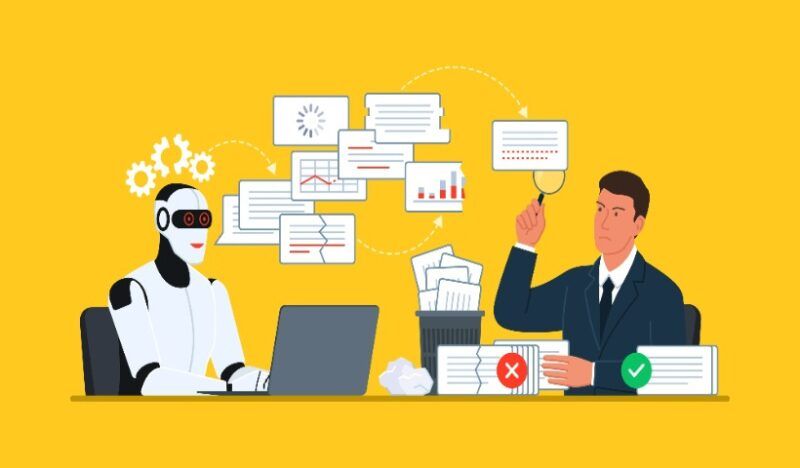
The pause serves a practical function. It creates space for verification. Before submitting AI-assisted work, users should ask concrete questions: Does this answer the actual prompt or question? Does every claim hold up under scrutiny? Are citations accurate and complete? Does the tone fit the context and audience? Would I stake my reputation on this output?
Some educational institutions have begun building pause-and-verify requirements into their AI policies. Stanford University's guidelines encourage students to treat AI outputs as drafts requiring revision. MIT's writing center asks students to identify which parts of their work came from AI and which came from their own thinking, forcing explicit reflection. These approaches treat AI as a tool for generating raw material, not finished work.
The pause also develops metacognitive skills that matter independent of AI. Students who regularly evaluate their own outputs develop judgment about quality, accuracy, and completeness. They learn to distinguish between what sounds good and what actually works. Professionals who verify AI assistance maintain the critical thinking that protects organizational integrity.
This does not mean AI users should distrust the technology or abandon it. AI can accelerate legitimate work and expand what individuals can accomplish. The pause does not reject efficiency. It protects it.
What changes next depends on institutional choices. Schools and workplaces can build verification requirements into their AI adoption guidelines. Teachers can explicitly teach evaluation strategies for AI-assisted work. Platforms can add prompts that encourage users to review outputs before sharing them.
The simplest intervention costs nothing. It requires only habit. Before you click submit, pause. Read your work as if someone else wrote it. Ask whether you would actually stake your credibility on every sentence. That moment of reflection separates responsible AI use from careless deployment.