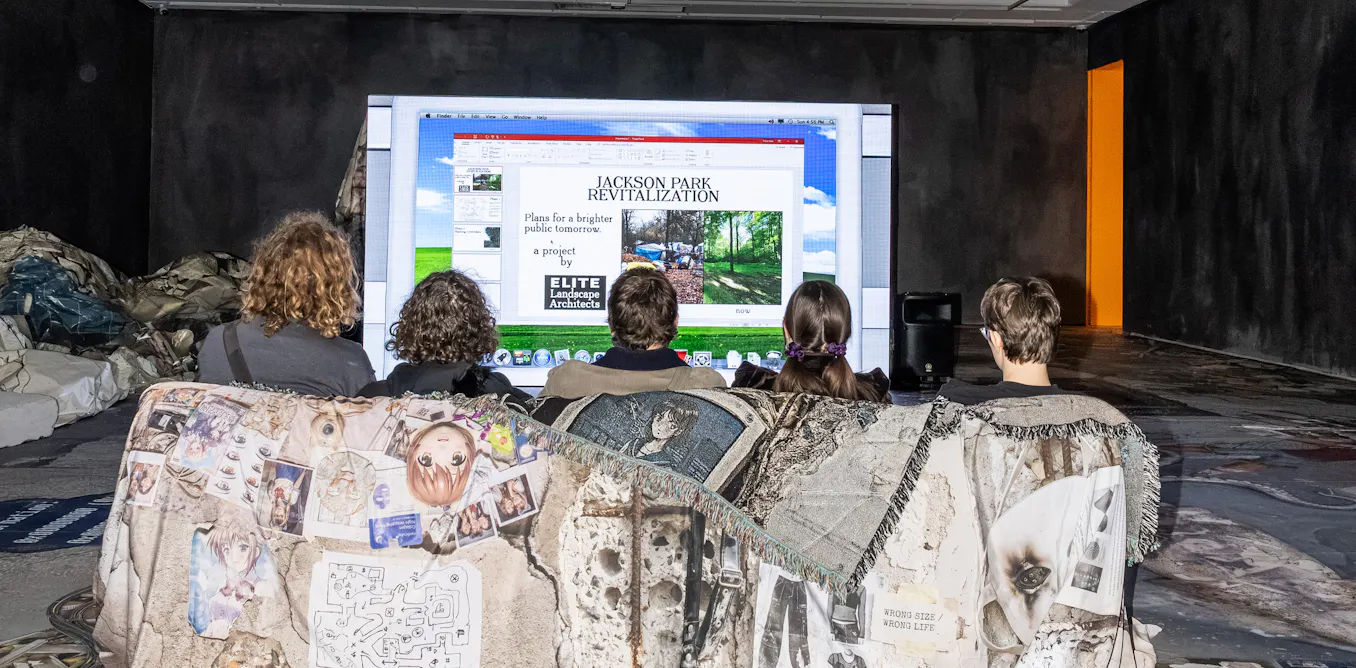
# Artist Jon Rafman Explores Internet's Dark Corners in Brisbane Retrospective
Canadian artist Jon Rafman brings his unflinching examination of digital culture to Brisbane's Institute of Modern Art in "Memento Hikikomori," a career-spanning exhibition that positions him as a contemporary chronicler of the internet's shadow spaces.
Rafman's work draws comparison to Francisco Goya, the 18th-century Spanish painter known for depicting human suffering and psychological torment. Like Goya's "Black Paintings," Rafman's digital installations, videos, and photographs confront viewers with uncomfortable truths. His subjects range from the mundane absurdities captured by Google Street View to the more disturbing content that circulates through anonymous forums and darknet spaces.
The exhibition title references hikikomori, a Japanese social phenomenon describing individuals who withdraw entirely from public life, often spending years in isolation. This concept anchors Rafman's broader artistic inquiry into how the internet enables both connection and profound disconnection. His work asks uncomfortable questions about digital voyeurism, loneliness, and the human desire to witness transgression.
Rafman gained early recognition through "9-Eyes," a series begun in 2006 that culls strange, surreal, and disturbing images from Google Street View. The project transformed casual screenshots into art, highlighting how algorithmic systems inadvertently capture moments of human vulnerability, loss, and strangeness. What might appear as a casual Google Earth browse becomes, in Rafman's hands, a meditation on surveillance, privacy, and the permanent record created by digital documentation.
His more recent work pushes deeper into internet culture's psychological underbelly. Video installations explore themes of isolation, online communities built around shared perversity, and the blurred boundaries between observer and observed. Rafman refuses sanitized representation. He documents what actually exists online, not what institutions prefer to acknowledge exists.
The Brisbane retrospective comes at a moment when artists, educators, and policymakers grapple with how digital platforms shape consciousness, particularly among young people. Rafman's work provides visual language for discussing these shifts without moralizing. He neither condemns the internet nor celebrates it. Instead, he documents its texture, its inhabitants, and the psychological states it produces.
For educators and parents, Rafman's art offers a framework for discussing digital literacy that extends beyond safety warnings and screen-time recommendations. His work acknowledges that the internet is not separate from human nature but rather an amplification of existing human desires, fears, and pathologies. Understanding Rafman's artistic vision means understanding how contemporary consciousness increasingly develops through digital mediation.
"Memento Hikikomori" runs at Brisbane's Institute of Modern Art and presents an artist committed to bearing witness to internet culture in all its perversity. The exhibition demonstrates that serious artists engage with digital spaces not to condemn them but to understand them. Rafman's approach invites viewers to examine their own relationship with digital platforms, online communities, and the persona they construct for consumption.
The work resists easy categorization. It functions simultaneously as social commentary, psychological exploration, and formal artistic investigation. Visitors encounter Rafman's aesthetic vision across multiple media, unified by his unflinching commitment to depicting the internet as it actually functions, rather than as institutions wish it to function.