# Syria: Rebuilding Education in a Shattered System
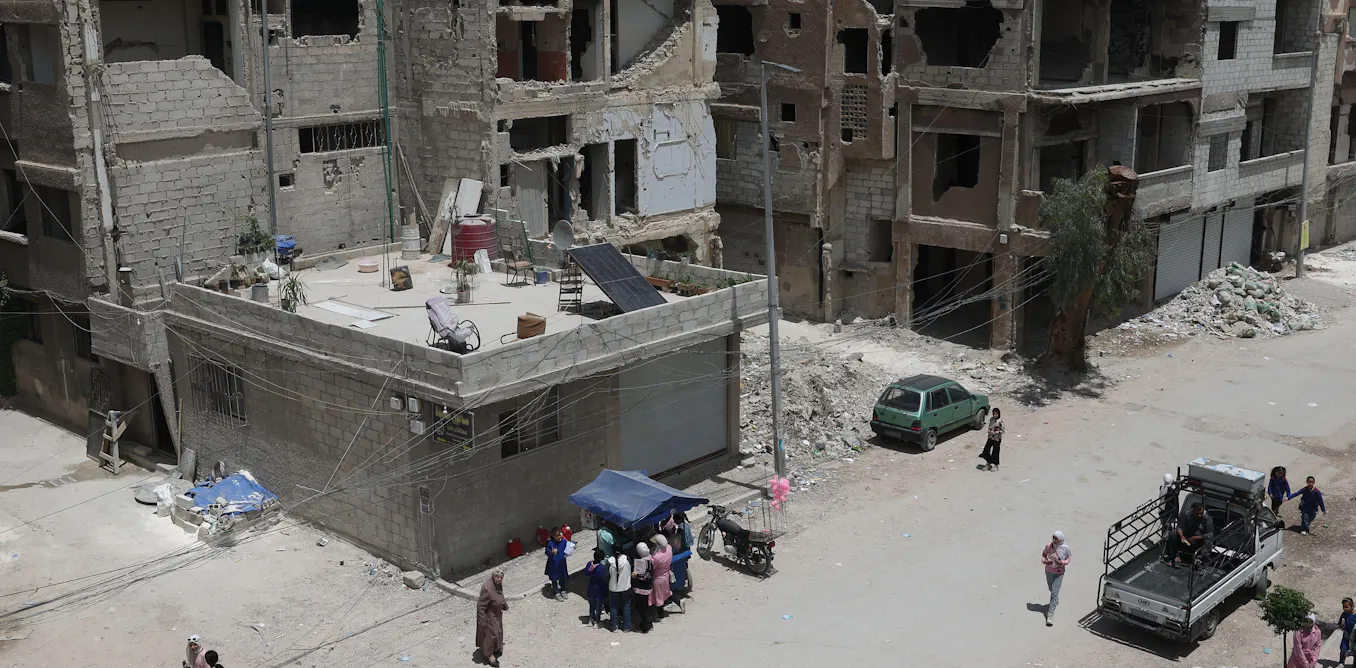
Syria's civil war has left the country's education system in severe disrepair. Researchers who traveled through devastated Syrian cities documented how families and educators are attempting to rebuild learning infrastructure after nearly 13 years of conflict.
The Syrian education crisis reflects one of the world's most severe humanitarian emergencies. UNESCO estimates that 5.5 million Syrian children remain out of school. Many classrooms exist only as rubble. Teachers have fled or been killed. Textbooks vanished. The conflict destroyed roughly 40 percent of Syria's school buildings, according to international assessments.
What researchers found on the ground reveals the complex reality facing educators and families attempting to restore normalcy. In cities like Aleppo, Homs, and Damascus, communities operate makeshift schools in damaged buildings, often without reliable electricity, running water, or basic supplies. Teachers work for little or no pay. Parents struggle to send children to school while managing displacement, poverty, and trauma.
The research team documented how Syrians are pursuing education despite these obstacles. Some neighborhoods have established informal learning centers run by volunteers and displaced teachers. Families prioritize schooling when they can afford it, though many cannot. Students face pressure to work rather than study, especially in households where parents were killed or injured during the war.
Digital learning offers limited help. Internet access remains sporadic across Syria. Many families lack devices. Rural areas have virtually no connectivity. Refugees who fled to neighboring countries, including Turkey, Lebanon, and Jordan, face different barriers. Host countries struggle to accommodate Syrian students in their own school systems, which are already underfunded.
International organizations including UNICEF, Save the Children, and the World Food Programme have expanded operations to address the crisis. Their efforts focus on teacher training, school rehabilitation, and psychosocial support for traumatized children. The United Nations estimates that restoring Syria's education system requires billions in investment.
Recovery remains uneven and fragile. In government-controlled areas, schools have reopened, but quality varies dramatically. In opposition-held regions, education systems function with minimal resources. Ongoing displacement continues disrupting schooling for hundreds of thousands of children each year.
Teachers face particular challenges. Many lack current certifications. War-related trauma affects their ability to teach. Some fled to Europe or North America, draining the profession of experienced educators. Those who remain often teach multiple grades in single rooms, without textbooks or learning materials.
The psychological toll on students cannot be overstated. Children have experienced bombardment, witnessed violence, and lost family members. Many schools lack counselors or mental health services. Teachers report widespread anxiety, depression, and behavioral problems among students trying to concentrate on academics while processing trauma.
Long-term reconstruction will require sustained funding, political stability, and regional cooperation. Syria's education system cannot recover without safe passage for teachers and students, functioning infrastructure, and investment in teacher salaries and training. International donors have pledged support, though actual disbursement remains inconsistent.
The researchers' findings underscore that rebuilding after conflict extends far beyond constructing buildings. It requires restoring human capacity, psychological healing, and institutional trust. Every month that passes without adequate education services pushes more Syrian children further behind academically and developmentally, with consequences that will shape the country for decades.